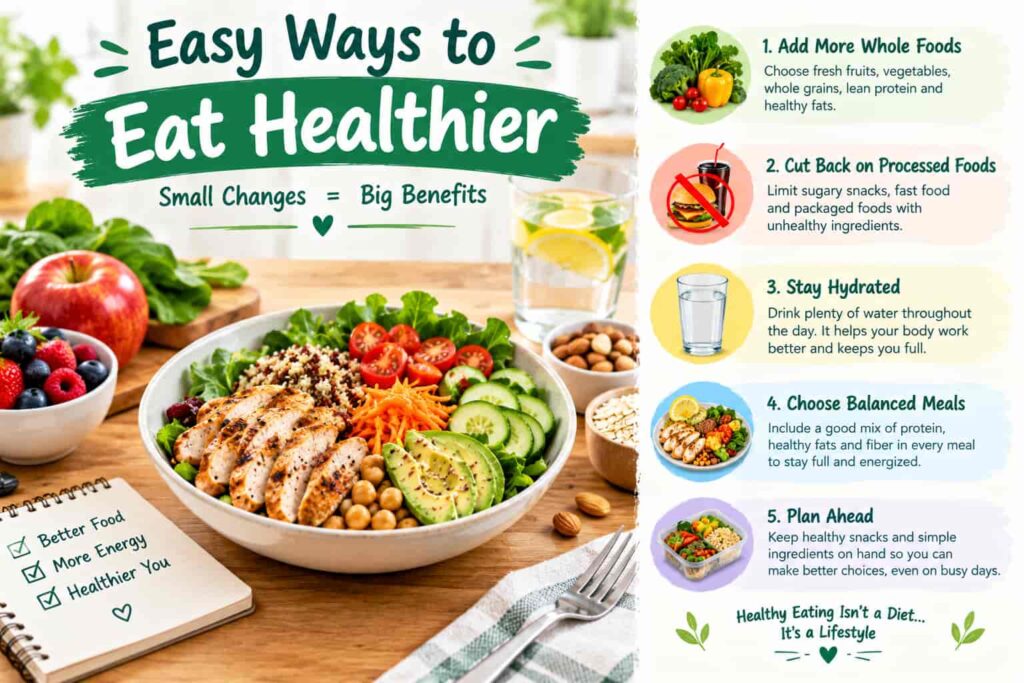
Easy Ways to Eat Healthier
A few years ago I tried one of those strict 30-day “clean eating” plans. I lasted eleven days, ate an entire pizza out of spite, and went right back to my old habits probably worse than before. That’s when I realized the problem wasn’t willpower. It was that the plan itself was unsustainable.
If you’re searching for easy ways to eat healthier, the goal shouldn’t be perfection. It should be small changes you can actually keep up with on a random Tuesday, not just during a burst of motivation. Here’s what’s actually worked, both for me and based on what nutrition research keeps pointing back to.
Start With What You’re Already Eating
Before adding anything new, look at your current meals. Most people don’t need a complete diet overhaul they need a few small swaps.
- Swap white bread for whole grain, if you eat sandwiches often.
- Add a vegetable to meals you already make, instead of designing new ones from scratch.
- Switch sugary drinks for water or unsweetened tea, even just half the time.
None of this requires meal prepping on Sundays or buying special ingredients. It’s just adjusting what’s already on your plate.
Eat Protein and Fiber First
This one sounds almost too simple, but it genuinely changed how I eat. Protein and fiber both keep you full longer, which means you’re less likely to snack on something less healthy an hour later.
Practically, this means starting a meal with eggs, beans, chicken, or lentils rather than jumping straight to the carb-heavy side of the plate. It’s not about cutting carbs it’s about the order and balance.
A Quick Reference: Small Swaps That Add Up
| Instead Of | Try | Why It Helps |
|---|---|---|
| Sugary soda | Sparkling water or unsweetened tea | Cuts added sugar without losing the fizz |
| White rice | Brown rice or quinoa | More fiber, keeps you full longer |
| Fried snacks | Roasted nuts or air-popped popcorn | Less oil, still satisfying |
| Sugary cereal | Oats with fruit | Slower energy release, fewer sugar spikes |
| Store-bought dressing | Olive oil + lemon | Fewer additives, healthy fats |
| Flavored yogurt | Plain yogurt + honey or fruit | Much less added sugar |
You don’t need to make every swap at once. Even two or three of these, done consistently, make a real difference over a few months.
Plan Just Enough Not a Full Weekly Menu
Meal planning sounds great in theory, but for most people it falls apart by Wednesday. What actually works better is keeping a short list of 5–6 meals you already know how to make and rotating through them. Less decision fatigue, less food waste, and you’re not stuck ordering takeout because you didn’t plan.
Don’t Skip Meals to “Save Calories”
I used to skip breakfast thinking it would help me eat less overall. It backfired every time I’d end up starving by 2 PM and overeat at dinner. Regular, balanced meals actually help control appetite better than skipping ever does. If you’re not hungry in the morning, even something small like yogurt or a piece of fruit keeps blood sugar steadier through the day.
Watch Portions, Not Just Ingredients
Even healthy food adds up in large amounts. A simple trick: use a smaller plate, or mentally split your plate into half vegetables, a quarter protein, and a quarter carbs. It’s not about strict measuring just a rough mental guide so meals stay balanced without overthinking every bite.
Cook at Home More Often (Even Just a Bit More)
Restaurant and packaged meals tend to have more hidden sugar, salt, and oil than home-cooked versions of the same dish. You don’t need to cook every meal even going from eating out five times a week to three makes a noticeable difference over time. Simple recipes with five or six ingredients are often just as satisfying as complicated ones, and far more sustainable.
If you’re also trying to build better habits overall, our guide on simple meal prep ideas for beginners and our post on how to read nutrition labels go well with this.
The Real Key: Consistency Over Perfection
Nobody eats perfectly all the time, and honestly, trying to is what makes most healthy eating attempts fail. A slice of cake at a birthday party or fries with friends isn’t going to undo anything. What actually matters is what you eat most of the time, not what you eat occasionally.
For more evidence-based nutrition guidance, the Harvard T.H. Chan School of Public Health and British Nutrition Foundation are solid, research-backed places to dig deeper.
Frequently Asked Questions (FAQs)
1. What’s the easiest way to start eating healthier? Start with one small swap, like water instead of soda, rather than overhauling your whole diet at once. Small changes are far easier to stick with long-term.
2. Do I need to cut out carbs to eat healthier? No. The focus should be on portion and quality whole grains over refined ones rather than eliminating an entire food group.
3. How can I eat healthier on a busy schedule? Keep a short rotation of simple, familiar meals instead of planning something new every day. Less decision-making means you’re less likely to grab fast food out of convenience.
4. Is skipping meals a good way to eat healthier? Not usually. Skipping meals often leads to overeating later and can make it harder to keep energy and appetite steady through the day.
5. How long does it take to notice results from eating healthier? Most people notice changes in energy and digestion within a couple of weeks, though visible physical changes usually take longer and depend on consistency.