
Think about your last grocery trip. Odds are something in the trolley came in a packet with an ingredient list you never read. Mine usually does too, and I don’t know anyone who reads every one of them.
Lately the term “ultra-processed foods” gets thrown around online like it explains everything wrong with how we eat. It doesn’t, not entirely. But it points at something real, so it’s worth knowing what people actually mean by it.
What are ultra-processed foods?
The short version: they’re foods made in a factory from industrial ingredients, with hardly any real food left by the time they reach you. The Nova system describes them as industrially formulated products made from several industrial ingredients and processing steps, with little or no whole food remaining. nih
Take a potato. You can boil it, fry it, mash it in your own kitchen. Now think of a bag of masala chips. It started out as a potato, sure, but by the end it’s been through oils, flavour powders and a few additives you’d never keep in your cupboard. Same starting point, very different product.
The classification comes from Brazil. A team led by Dr. Carlos Monteiro came up with Nova back in 2009, sorting food into four groups depending on how heavily it’s processed. Most of the studies you’ll read about use it. greenqueen
| Nova group | What’s in it | Examples |
|---|---|---|
| 1. Unprocessed or minimally processed | Natural foods, maybe washed, chopped, dried or frozen | Fruit, vegetables, eggs, plain milk, rice, lentils |
| 2. Culinary ingredients | Things taken from group 1 for cooking | Oil, butter, sugar, salt |
| 3. Processed foods | Simple foods made from groups 1 and 2 | Fresh bread, canned beans, cheese, salted nuts |
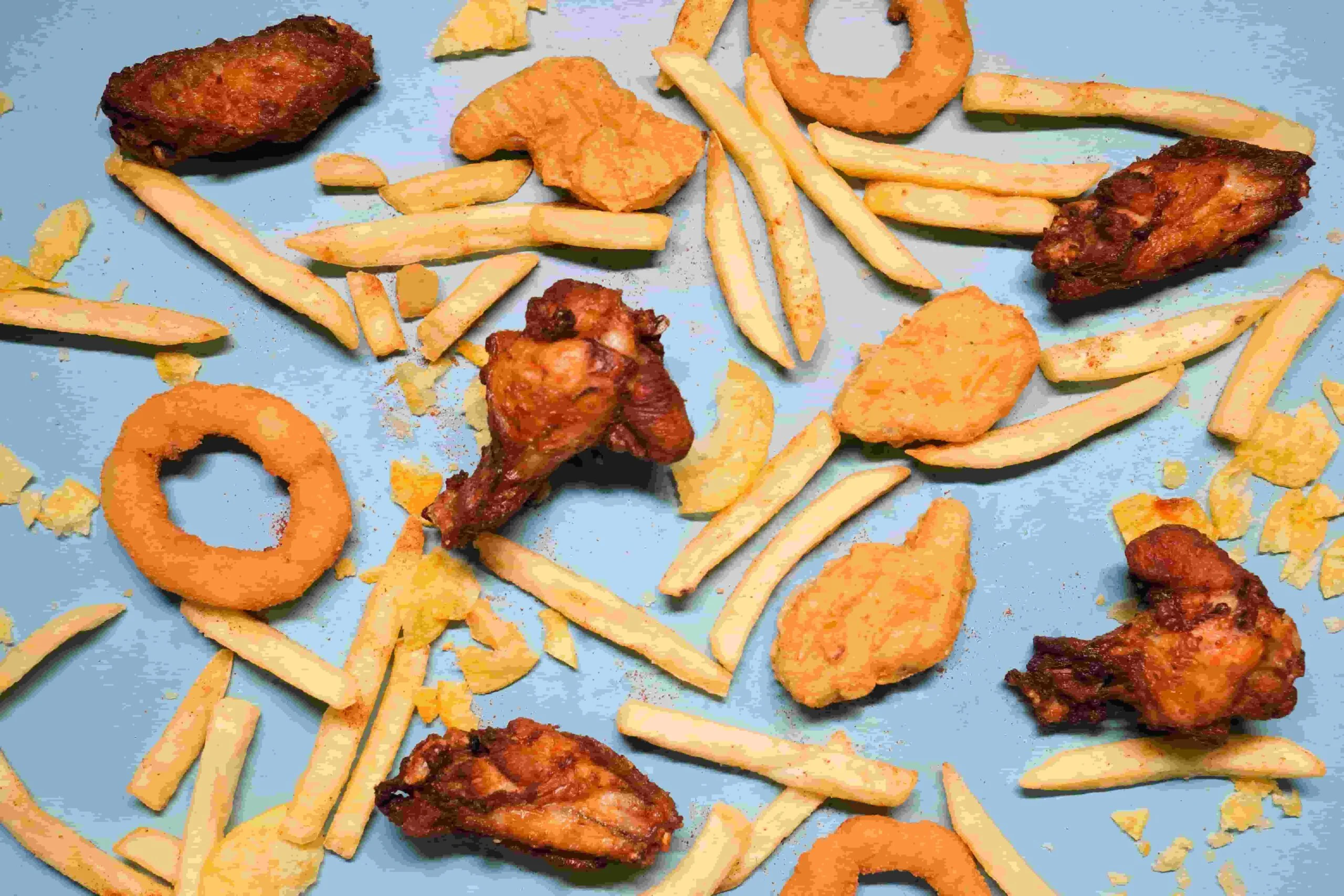
| 4. Ultra-processed foods | Factory formulations with lots of additives | Soft drinks, instant noodles, packaged biscuits, nuggets |
How to tell when you’re holding one
You really don’t need a nutrition degree for this. Flip the packet over. If the ingredients run long and half of them sound like they belong in a lab, such as emulsifiers, colourings, flavour enhancers or sweeteners, it’s almost certainly group 4. A very long shelf life is another hint, and so are big claims on the front like “high protein” or “added vitamins”, which tend to show up on products that are far from natural.
Here’s a test I like: could you make something similar at home from normal ingredients? If not, that’s your answer.

Everyday examples, and what you could eat instead
| Ultra-processed | Simpler swap |
|---|---|
| Flavoured instant noodles | Plain noodles with an egg and some vegetables |
| Boxed fruit drink | A real fruit, or fresh lemonade |
| Sugary breakfast cereal | Oats with banana and a few nuts |
| Frozen chicken nuggets | Chicken cooked at home |
| Packaged chips | Roasted chickpeas or a handful of nuts |
Nobody’s asking you to swap everything overnight. Changing one thing a day is plenty to start with.
So why are people worried?
Partly it’s what’s inside them: a fair bit of sugar, salt and refined fat. Partly it’s how easy they are to finish. They taste good, they’re soft, and you can eat them in front of a screen without noticing.
A large umbrella review in The BMJ combined 45 earlier meta-analyses and linked higher intake of these foods with 32 negative health outcomes, with the strongest evidence for heart disease, type 2 diabetes and common mental health problems. There was also a well-known US National Institutes of Health trial where people ended up eating around 500 extra calories a day on an ultra-processed menu, even though nobody told them to eat more. sciencemediacentre
Worth remembering, though, that most of this research is observational. It shows a connection, not proof of cause. People who live on packaged food often differ in income, sleep and activity too, and that muddies the picture.
Processed doesn’t automatically mean bad
Even scientists disagree on how useful the group 4 label is. One review found very mixed results inside the category: processed meats, sweetened drinks and certain spreads and sauces were tied to higher risk, while some breads, wholegrain products and cereals were linked to lower risk. doaj
A sugary fizzy drink and a decent wholegrain loaf don’t belong in the same mental box, even if both came out of a factory. Canned chickpeas, frozen peas and plain yogurt are processed as well, and when you’re tired or short on cash they’re often the sensible pick.
If you’d like to dig into the research yourself, there’s an open-access paper on how ultra-processed foods are defined, another on the current evidence and the arguments around it, and a roundup of expert reactions to the BMJ review.
Cutting back without turning it into a project
Cook one extra meal at home this week. That’s about it, really. Read the first few ingredients before you buy something new, and if sugar or oil is sitting at the top, you’ll know what you’re dealing with. Keep rice, lentils, eggs, oats and frozen veg around so that dinner at 8 p.m. doesn’t automatically become whatever’s in a packet.
Our posts on healthy eating habits for beginners and easy meal prep can help if you want a starting point. And if you have a packet of biscuits tonight, that’s fine. Eating well is mostly about what you do on a regular Tuesday, not what you do on a special occasion.
FAQs
What are ultra-processed foods in simple words?
Factory-made products built mostly from industrial ingredients and additives, with very little whole food inside. Fizzy drinks, packaged snacks and instant noodles are the usual examples.
Are all processed foods unhealthy?
No. Canned beans, frozen vegetables, cheese and plain yogurt are all processed, and plenty of people eat them every day without any problem. The worry is mainly about heavily formulated products.
Is bread ultra-processed?
Depends on the loaf. One made from flour, water, yeast and salt is usually group 3. Supermarket bread with a long list of added emulsifiers and flavourings can fall into group 4.
How can I tell if something is ultra-processed?
Read the ingredients. A long list with unfamiliar additives like colourings, flavour enhancers or sweeteners is the biggest clue.
Do I need to avoid them completely?
Most experts don’t suggest that. Eating fewer of them, and building most meals around whole foods, is more realistic and easier to keep up.


