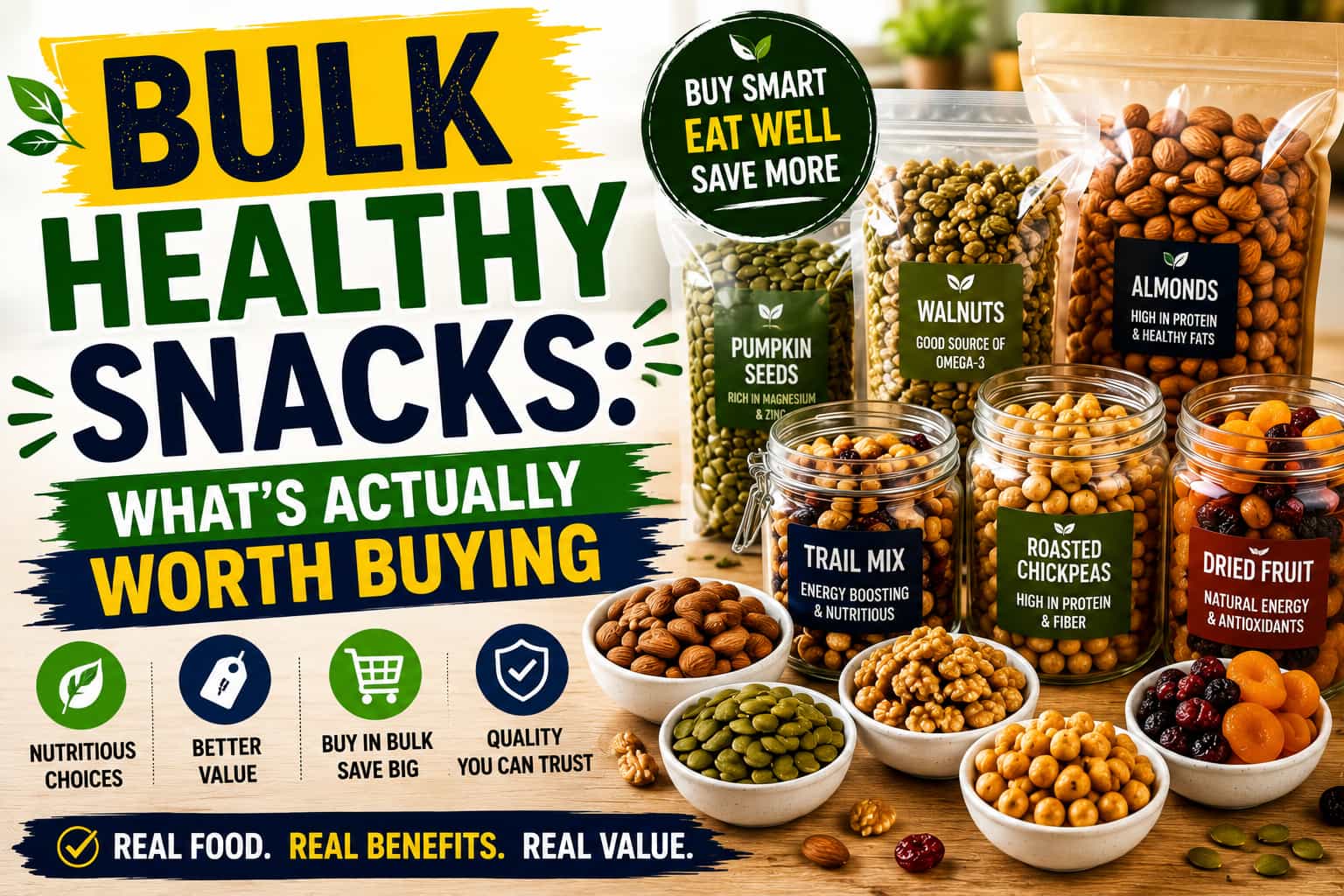
I started buying snacks in bulk mainly to save money, three kids in the house go through food faster than I expected, but the first few trips taught me a hard lesson. Bulk doesn’t automatically mean healthy. I came home once with a giant bag of trail mix that was basically candy with a few almonds hiding in it. Since then I’ve gotten a lot more careful about what actually goes in the cart.
If you’re looking into bulk healthy snacks, whether for a family, meal prepping, or just not wanting to run to the store every three days, here’s what’s genuinely worth buying in bulk and what tends to be a waste of pantry space.
Why Buy Snacks in Bulk at All
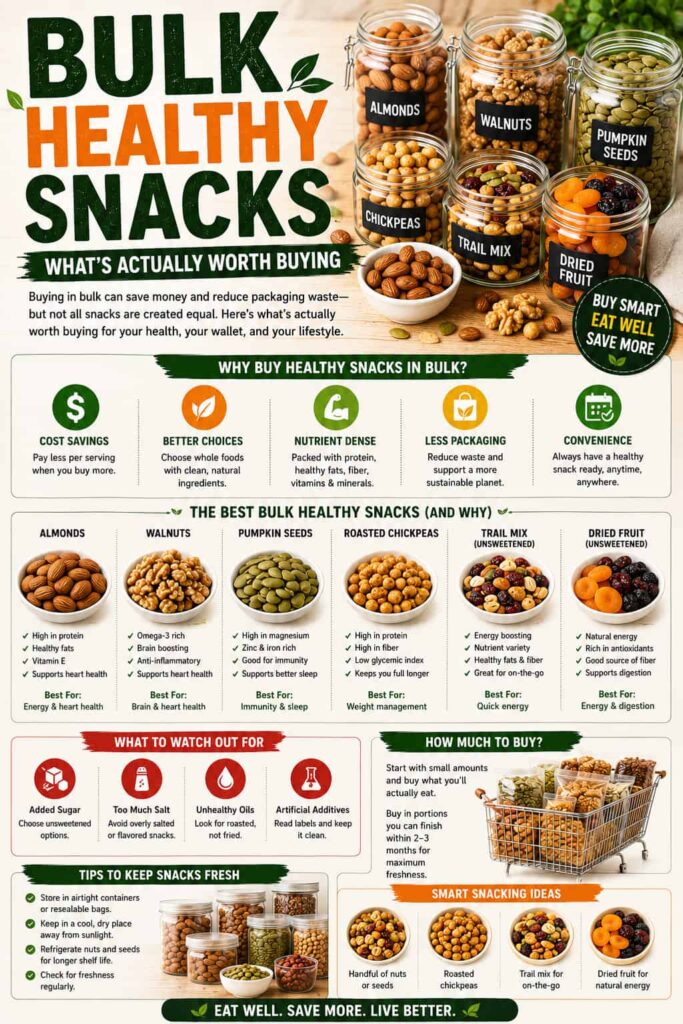
The obvious answer is cost, buying in bulk almost always works out cheaper per serving. But there’s more to it:
- Less packaging waste compared to buying individually wrapped snacks over and over
- Fewer last-minute store runs, which honestly cuts down on impulse junk food purchases too
- Easier to portion things out yourself, which gives you more control over what’s actually in each serving
- Works well for households, offices, or anyone feeding more than just themselves
The catch is that bulk buying only saves money and calories if you’re buying things that are actually good for you in the first place.
What’s Genuinely Worth Buying in Bulk
| Snack Category | Good Bulk Options | Notes |
|---|---|---|
| Nuts and seeds | Almonds, walnuts, pumpkin seeds, sunflower seeds | Buy raw or dry-roasted, skip the heavily salted or honey-glazed versions |
| Dried fruit | Dates, unsweetened dried apricots, raisins | Check labels a lot of dried fruit has added sugar even when it doesn’t need it |
| Whole grains | Oats, popcorn kernels, whole-grain crackers | Air-popped popcorn is one of the cheapest bulk snacks there is |
| Legume-based snacks | Roasted chickpeas, lentil chips | Higher protein and fiber than most chip alternatives |
| Protein powders/bars | Bulk protein bars, protein powder for homemade bites | Worth it if you actually use them regularly, otherwise they go stale |
Buying these in bulk actually saves money over time, since the per-serving cost drops noticeably compared to small individual packs.
What to Be Careful With
Not everything sold in bulk bins is a good deal nutritionally, even when it looks similar to the healthy stuff:
Trail mix blends. These are the biggest trap. A lot of bulk trail mix is mostly candy pieces, chocolate chips, or sugared dried fruit, with just enough nuts mixed in to seem healthy.
Granola. Often loaded with added sugar and oil, even the versions that look plain. Reading the label matters more here than almost anywhere else in the bulk aisle.
Flavored nuts. Honey roasted, sriracha, or anything with a coating usually means added sugar or excess sodium that plain roasted nuts don’t have.
Dried fruit with added sugar. Some dried fruit, mango especially, is often coated in sugar even though the fruit is already naturally sweet. Check for “unsweetened” on the label specifically.
If portion control has been an issue with bulk buying for you, our guide to healthy snack packs covers how to portion things out ahead of time so a big bag doesn’t turn into mindless grazing.
Storing Bulk Snacks So They Actually Last
Buying in bulk doesn’t help much if half of it goes stale or gets tossed. A few things that make a real difference:
- Airtight containers matter more than the bag things came in, nuts and seeds especially go rancid fast once exposed to air
- Nuts and seeds last noticeably longer in the fridge or freezer, particularly in warmer climates
- Portioning into smaller containers or bags right after buying prevents the “eat straight from the giant bag” problem
- Whole grains and dried legumes store well in a cool, dry pantry for months, no fridge needed
Making Your Own Bulk Snacks
Buying raw ingredients in bulk and making your own snacks often works out even cheaper and healthier than buying pre-made bulk snacks:
Homemade trail mix, where you control exactly what goes in, tends to have far less sugar than the bulk bin version.
Roasted chickpeas are simple to make at home with just oil and seasoning, and they store well for a week or two in an airtight container.
Energy bites, usually oats, nut butter, and a bit of honey, are easy to batch and freeze, making them a solid grab-and-go option.
Homemade granola lets you cut the added sugar way down compared to most store-bought versions, while keeping the same crunch people like it for.
For more on turning bulk ingredients into ready-to-eat portions, our meal prep basics guide covers batching techniques that work well alongside bulk snack buying.
FAQs
Is buying snacks in bulk actually cheaper? Usually, yes, especially for nuts, seeds, oats, and dried legumes. The savings shrink or disappear with processed bulk snacks like flavored trail mixes, though.
How long do bulk nuts and seeds stay fresh? Around 3 to 6 months in a cool pantry, longer if stored in the fridge or freezer. Rancid nuts will smell slightly off, which is the easiest way to tell.
What’s the healthiest bulk snack to buy on a budget? Oats and raw nuts tend to offer the best nutrition per dollar. Popcorn kernels are also extremely cheap and, air-popped, a genuinely healthy whole-grain snack.
Are bulk protein bars worth buying? Only if you’ll actually eat them regularly. Otherwise they tend to expire before you get through a big box, which cancels out the savings.
How do I stop myself from overeating from a bulk bag? Portion snacks into smaller containers right after buying rather than keeping one large bag accessible. It sounds simple, but it makes a real difference in how much people actually eat.
Final Thoughts
Bulk healthy snacks can genuinely save money and cut down on food waste, but only if you’re buying the right things and storing them properly. Skip the sugar-coated trail mixes and flavored nuts, stick with raw nuts, oats, seeds, and legumes, and portion things out so a big bag doesn’t quietly turn into a week of mindless snacking.
For more on nutrition and smart bulk food choices, the USDA MyPlate resources and Academy of Nutrition and Dietetics are both solid, research-backed places to dig deeper.