Healthy Food Swaps That Don’t Feel Like a Diet
Most people don’t fail at eating better because they lack willpower. They fail because “eating healthy” usually gets translated into giving up everything they actually enjoy and nobody sticks to that for long. The truth is a lot less dramatic. You don’t have to throw out your favorite meals; you just have to swap a few ingredients here and there. Do that consistently, and the difference adds up without ever feeling like a diet.
Below are some food swaps that are easy enough to actually stick with, plus a quick table you can screenshot for the fridge.
Why Small Swaps Beat Big Overhauls
Cutting out entire food groups or going cold turkey on sugar usually backfires within a couple of weeks. It’s just too big a shock to your routine. Swapping white rice for brown rice, though? You’ll barely notice, and your body still gets the fiber and nutrients it was missing. That’s really the whole idea behind food swaps change the ingredient, not the meal you already like eating.
Breakfast Swaps
Breakfast is where sugar hides the most, mostly because cereal boxes and flavored yogurts are marketed like dessert.
- Sugary cereal → Oatmeal with fruit. Plain oats with banana or berries on top gives you the same comfort-food feeling with way less added sugar and more staying power until lunch.
- Flavored yogurt → Plain yogurt + fresh fruit. That fruit “mixture” at the bottom of flavored yogurt cups is mostly sugar, not actual fruit. Adding real fruit yourself gives you more control and usually saves 10+ grams of sugar per cup.
- White toast + butter → Whole grain toast + avocado. Same crunch, but you’re getting fiber and healthy fats instead of refined flour and saturated fat.
Snack Swaps
This is where most people’s good intentions quietly fall apart around 4 PM.
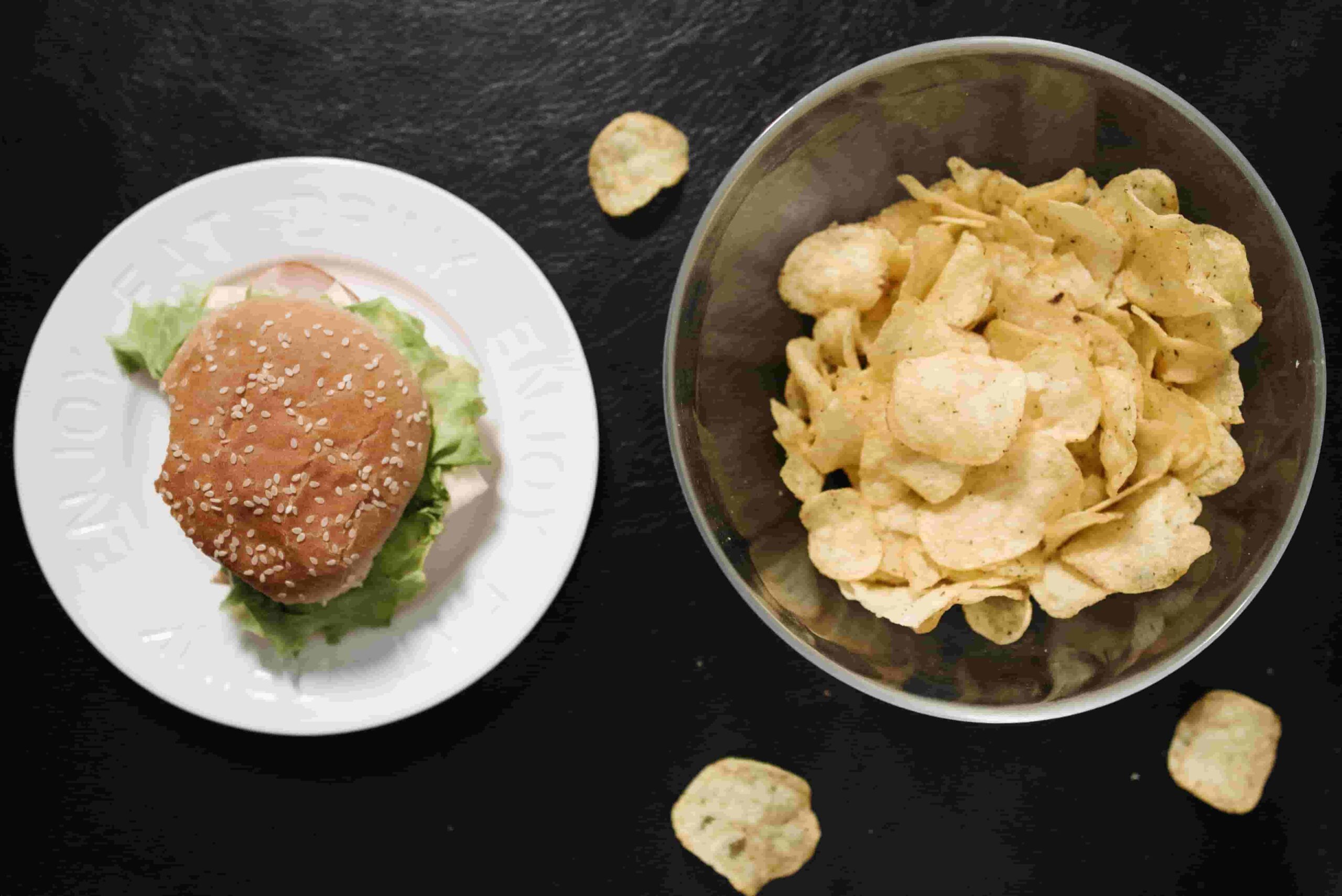
- Chips → Roasted nuts or air-popped popcorn. You still get the crunch and the salt, just without the deep-fried oil.
- Candy bar → A square or two of dark chocolate. Dark chocolate (70% cocoa or higher) satisfies the craving with less sugar and a bit of antioxidant benefit as a bonus.
- Soda → Sparkling water with a splash of real juice. If you’re used to the fizz and sweetness of soda, this combo scratches that itch without the sugar crash an hour later.
Cooking and Ingredient Swaps
Sometimes the swap isn’t what you eat, it’s how you cook it.
- Frying → Baking, roasting, or air-frying. Same texture in most cases, a fraction of the oil.
- White flour → Whole wheat flour (or a 50/50 blend if you’re not ready to go full whole wheat). Works fine in most baking recipes without changing the taste much.
- Sour cream → Plain Greek yogurt. Nearly identical texture and tang, but with more protein and less saturated fat. Works in dips, baking, and as a topping for tacos or baked potatoes.
- Bottled salad dressing → Olive oil + vinegar or lemon juice. Store-bought dressings are often loaded with added sugar and preservatives you’d never add yourself.
A Simple Swap Table
| Category | Typical Pick | Healthier Swap |
|---|---|---|
| Grains | White rice | Brown rice or quinoa |
| Bread | White bread | Whole grain bread |
| Dairy | Sour cream | Plain Greek yogurt |
| Snacks | Potato chips | Roasted nuts or popcorn |
| Sweets | Milk chocolate | Dark chocolate (70%+) |
| Drinks | Soda | Sparkling water + fruit splash |
| Cooking fat | Butter (in baking) | Mashed banana or applesauce |
| Pasta | Refined pasta | Whole wheat pasta or zucchini noodles |
You Don’t Have to Swap Everything at Once
One mistake people make is trying to apply every single swap on day one. That’s a fast track to burning out by week two. Pick two or three that fit your actual routine maybe the yogurt swap and the chip swap and let those become normal before you add more. According to the NHS’s guide on healthier food swaps, even one or two everyday changes can make a noticeable difference over time, and that’s really the point: this isn’t about perfection, it’s about the direction things are heading.
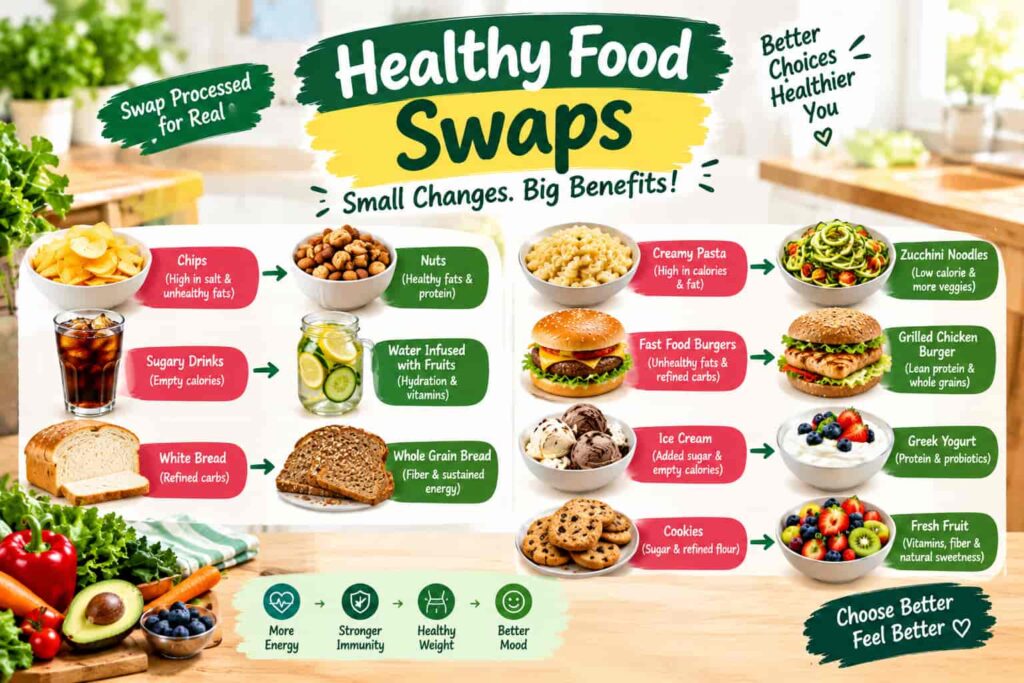
When a Swap Doesn’t Work, Try a Different One
Not every swap fits every person. Some people genuinely can’t stand cauliflower rice and that’s fine, there’s no rule saying you have to force it. If a swap feels like a downgrade rather than a sidestep, try a different one instead. The whole point of food swaps is that they should feel close enough to the original that you don’t miss it, not that you’re gritting your teeth through a “healthier” version you don’t actually enjoy.
Final Thoughts
Healthy eating isn’t really about restriction it’s about which version of a food ends up in your hand. Oatmeal instead of sugary cereal, Greek yogurt instead of sour cream, sparkling water instead of soda. None of these changes ask you to give up flavor or comfort, they just shift where the calories, sugar, and fat are coming from. If you’re building your weekly meals around swaps like these, pairing them with a simple meal planning routine makes it easier to stay consistent. For more ideas broken down by meal, the NHS healthier food swaps guide is a solid, practical resource worth bookmarking.
Frequently Asked Questions
1. What are healthy food swaps, exactly? They’re simple ingredient substitutions like brown rice instead of white rice, or Greek yogurt instead of sour cream that lower sugar, salt, or unhealthy fat in a meal without changing what you’re actually eating.
2. Do healthy food swaps actually make a difference? Yes, especially when they’re repeated regularly. A single swap might only save a few grams of sugar or fat, but done daily over months, it adds up to a real shift in overall diet quality.
3. How many swaps should I try at once? Start with two or three that fit naturally into your routine. Trying to change everything at once usually doesn’t last, while a few consistent swaps tend to stick.
4. Are food swaps only useful for weight loss? No. While many swaps do reduce calories, the bigger benefit is usually better nutrient intake more fiber, protein, and vitamins, and less added sugar and sodium regardless of your weight goals.
5. What if I don’t like a particular healthy swap? Try a different one. Not every substitute works for every person’s taste, and forcing down a swap you dislike rarely lasts. The goal is finding versions that feel like an easy trade, not a sacrifice.