
A friend of mine once tracked her steps so obsessively she’d pace around the kitchen at 11 pm just to hit ten thousand. I used to think that was excessive, until I downloaded my first fitness app and found myself doing the same thing three days later. There’s something weirdly addictive about watching a progress bar fill up — and that’s exactly why fitness tracking apps work for so many people.
If you’re new to this whole world and trying to figure out where to start, you’re not alone. There are dozens of options out there, and picking the wrong one usually means abandoning it within a month. So let’s break down what actually matters.
Why Bother With a Fitness App at All
Motivation fades. That’s how it goes for most of us — the first week of a new fitness routine feels great, then week three rolls around and suddenly you can’t remember the last time you exercised. A good app fights that drop-off by making your progress visible, which sounds simple but genuinely changes behavior.
These apps also remove a lot of guesswork. Instead of estimating calories burned or distance walked, you get actual numbers. For a lot of people, that data becomes the thing that keeps them showing up, even on days motivation alone wouldn’t cut it.
What to Look For in Workout Tracking Tools
Not every app does the same job well, so it helps to know what you need before downloading five different ones and giving up on all of them.
Accuracy matters more than flashy design. A step counter that’s off by two thousand steps a day isn’t doing you any favors, no matter how nice the interface looks. Check whether the app syncs with a wearable device too, since phone-only tracking tends to be less reliable for heart rate or sleep data.
Ease of use is underrated. If logging a workout takes five confusing taps, you’ll stop within a week — that’s just human nature. And think about what you actually want to track. Someone training for a marathon needs very different features than someone just trying to walk more during the day.
Comparing the Popular Options
There’s no single best app for everyone, which is honestly the most common thing people get wrong when picking one. It depends on your goals.
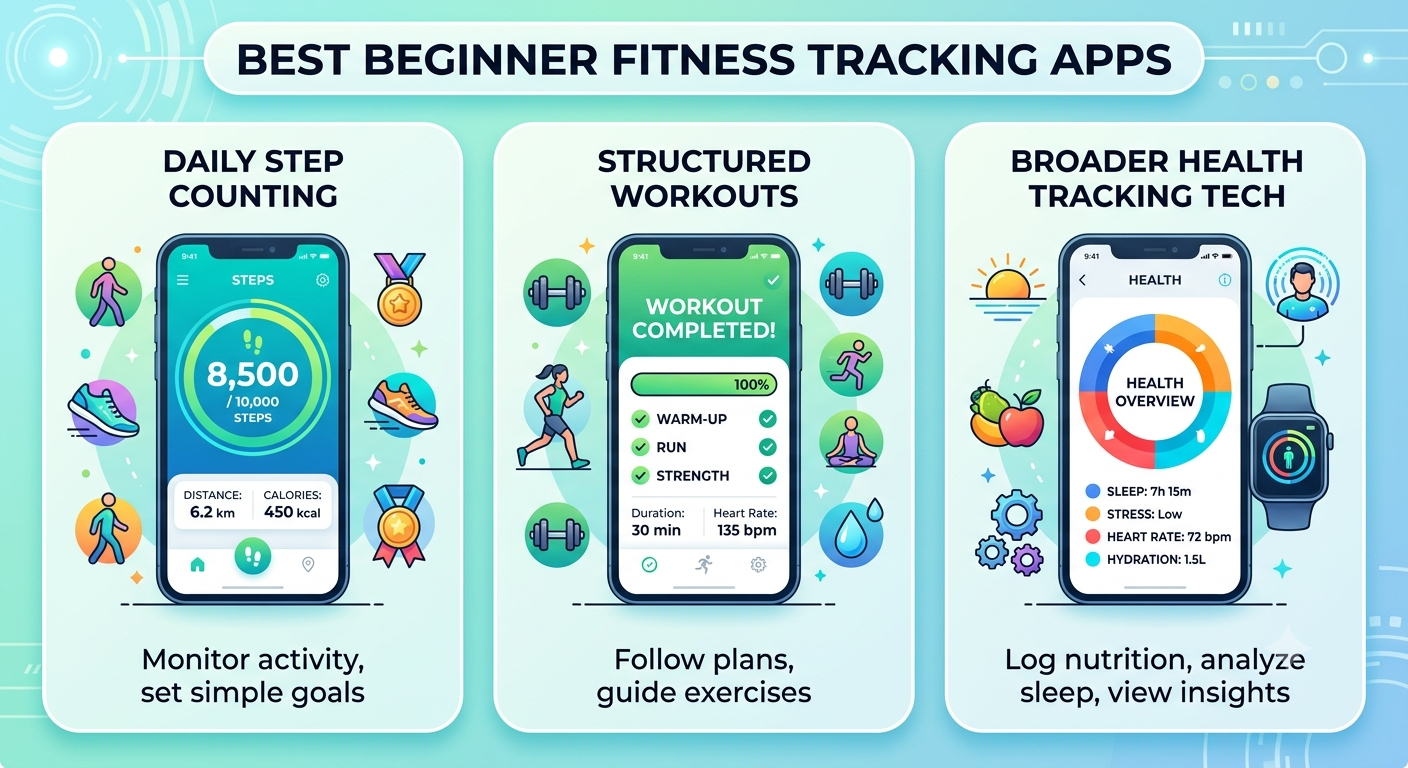
For pure step counting and daily activity, simpler apps tend to win out — lightweight, less battery drain, no burying you in features you’ll never touch. If your main goal is just moving more throughout the day, this category is where to start.
Apps built around structured workouts work better for people lifting weights or following specific training plans. These usually let you log sets, reps, and rest times, building a history you can look back on to see actual strength gains over months.
Then there’s the category focused on broader health tracking technology — sleep, heart rate trends, recovery scores, that sort of thing. These tend to pair with a wearable and give a fuller picture beyond just exercise, which some find genuinely useful and others find a bit overwhelming.
Running and cycling-focused apps deserve a mention too, since they map routes, track pace, and let you compare performance over time, which keeps a lot of runners motivated in ways a generic tracker never quite manages.
Step Counting Apps for Daily Activity
If you’re not into structured workouts and just want to move more, a basic step counter genuinely covers most of what you need. Most smartphones already have one built in, worth checking before downloading anything extra.
What actually makes these useful is consistency over time, not the exact number each day. Watching your weekly average creep upward tells you more than obsessing over hitting ten thousand steps on any single day. Some weeks will be lower, and that’s fine — the trend matters more than any one number.
Best Fitness Tracking Apps for Beginners
Starting out, simplicity beats features almost every time. A beginner-friendly app should track the basics clearly: steps, workouts, maybe water intake, without burying that under a dozen menus you’ll never explore.
Look for something with a forgiving learning curve, clear visuals, and ideally a free version so you’re not committing money before knowing whether you’ll stick with it. Many people switch apps two or three times before settling on one that fits their habits, and that’s completely normal. Don’t stress over picking the “perfect” one on the first try.
Making the Most of Whatever You Choose
Whichever app you land on, tracking only helps if you actually look at the data occasionally. Set a weekly check-in, even two minutes scrolling through your stats, to notice patterns — maybe you walk less on weekends, or workouts dip whenever sleep gets shorter.
Don’t chase perfect numbers every day. Fitness progress is messy by nature, and an app’s real job is showing the bigger trend, not punishing you for one-off days.
Conclusion
Picking the right fitness tracking app comes down to matching it to what you actually want out of it, not whichever one has the most features or flashiest reviews. Whether you’re after simple step counting, structured workout logs, or deeper health tracking technology, there’s something out there that fits. Start with one, give it a few weeks, and adjust from there. The best app is ultimately just the one you’ll actually keep using.
FAQs
1. What’s the best fitness tracking app for someone just starting out? Simpler apps with clean interfaces tend to work best for beginners, since they track core metrics without overwhelming you with extra features early.
2. Do I need a wearable device for accurate tracking? Not strictly, though wearables generally give more accurate heart rate and sleep data than phone-only tracking.
3. How do step counting apps compare to fitness wearables? Step apps are simpler and lighter, while wearables typically add metrics like heart rate, sleep stages, and recovery insights.
4. Can fitness apps actually help with weight loss goals? They can, mainly by improving awareness around activity and habits, though the app is just a tool, not a replacement for diet and consistency.
5. Is it normal to switch fitness apps multiple times before sticking with one? Completely normal. Most people try a few before finding one that fits their routine and motivation style.