Here is something most people get wrong when they decide to lose weight: they go straight to the treadmill, set it to a moderate pace, and jog for 45 minutes while watching TV. Every day. For weeks. And then they wonder why the scale is barely moving.
Cardio works — but not all cardio works equally. The way most beginners approach it is one of the least efficient uses of gym time possible. If you want cardio workouts that burn fat fast, you need to be a little more strategic about it.
How Cardio Actually Helps With Fat Loss
Before jumping into routines, it helps to understand how cardio helps with fat loss in the first place, because it is not just about calories burned during the workout.
When you do low-intensity steady-state cardio (think: a long, relaxed walk or a casual bike ride), you burn a reasonable number of calories while you are moving. Fine. Decent. Nothing special.
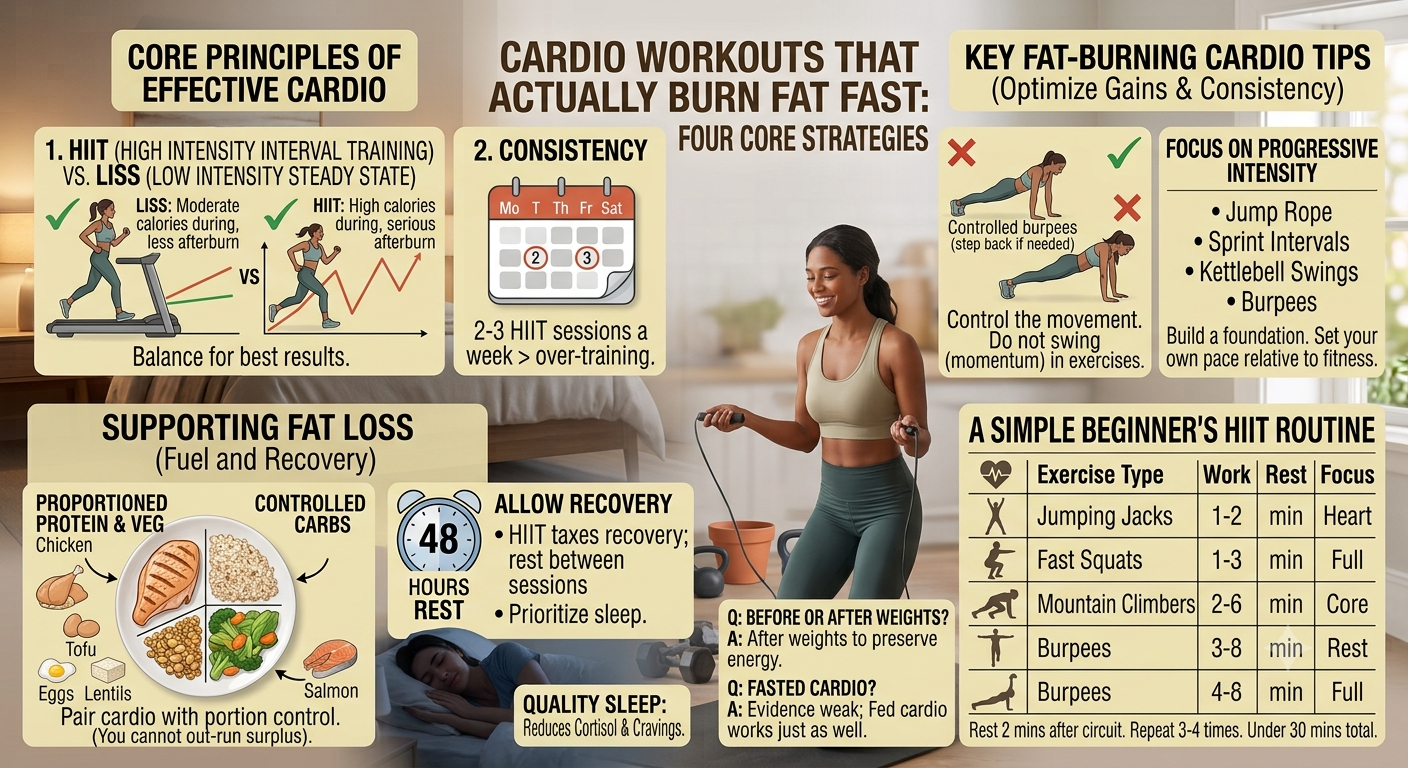
But when you push into higher intensity — short explosive bursts followed by rest — something different happens. Your body continues burning calories at an elevated rate for hours after you stop. This is called the afterburn effect, and it is why HIIT cardio workouts have become so popular among people who actually want results without spending their entire life exercising.
The honest answer to “which is better” is: both have a place. HIIT sessions two to three times a week, mixed with some low-intensity movement on other days, is a combination that works really well for most people.
Best Cardio Exercises for Weight Loss
You do not need a gym or expensive equipment. These are some of the best cardio exercises for weight loss — simple, effective, and adaptable to any fitness level.
Jump Rope
Underrated, affordable, and brutal in the best way. Jumping rope burns more calories per minute than most forms of cardio, improves coordination, and spikes your heart rate almost immediately. Ten minutes of solid jump rope work is no joke.
Sprint Intervals
Whether you are on a track, a treadmill, or just a quiet street, sprinting is one of the fastest ways to trigger fat-burning cardio. Go hard for 20 to 30 seconds, walk to recover, repeat. Simple formula, serious results.
Kettlebell Swings
This one blurs the line between cardio and strength training in a genuinely useful way. Kettlebell swings work your glutes, hamstrings, and lower back while keeping your heart rate elevated the whole time. One piece of equipment, and a kettlebell, makes a strong argument.
Burpees
Nobody enjoys burpees. But they work, and that is hard to argue with. Full body, no equipment, and they will get your heart rate up faster than almost anything else on this list.
HIIT Cardio Workouts for Beginners: A Simple Starting Point
You do not need to be an athlete to start HIIT. The “high intensity” part is relative to your current fitness level — if a fast walk is genuinely your maximum right now, that counts. Progress from there.
Here is a beginner-friendly circuit you can do anywhere, no equipment needed:
| Exercise | Work | Rest | Focus |
| Jumping Jacks or High Knees | 30 sec | 30 sec | Heart rate spike, full body warmup |
| Fast Bodyweight Squats | 30 sec | 30 sec | Lower body power, calorie burn |
| Mountain Climbers | 30 sec | 30 sec | Core stability, cardio push |
| Burpees (step back if needed) | 30 sec | 30 sec | Full body, maximum effort |
Rest for 2 minutes after the full circuit, then repeat 3 to 4 times. The whole thing takes under 30 minutes. That is it — that is a complete HIIT cardio workout for beginners right there.
As you get fitter, progress from jumping jacks to high knees, from stepping back in burpees to jumping, from jogging to sprinting. The structure stays the same; the intensity goes up.
FAQs
Q: Should I do cardio before or after lifting weights? If you are doing both in the same session, lift first. Weight training needs your best energy and sharpest focus. Starting with cardio leaves your muscles pre-fatigued, which makes your lifts less effective and raises the risk of sloppy form. Save the cardio for after your sets are done.
Q: How many times a week should I do cardio for weight loss? Two to three HIIT sessions per week is plenty for most people. Fill the other days with lighter movement — a brisk walk, a bike ride, something that keeps you active without taxing your recovery. More is not always better, especially with high-intensity work. Doing it every single day almost always leads to burnout.
Q: I am completely out of shape. Can I still do HIIT? Yes, and honestly HIIT is more accessible than people think because you set your own intensity. If a fast walk is your max effort, alternate between fast and slow walking. That is legitimate interval training. The best cardio exercises for weight loss are always the ones you can do consistently — start where you are, not where you wish you were.
Q: Does doing cardio on an empty stomach burn more fat? This one comes up constantly, and the evidence for it is pretty weak. Fasted cardio does not meaningfully outperform fed cardio when total daily calorie burn is accounted for. If working out before breakfast feels good to you, fine. If not, eat something light and get it done. The workout matters more than the timing.
Q: Why am I doing cardio regularly but not losing weight? Almost always, the answer is diet. Cardio burns calories, but it also tends to increase appetite — and it is very easy to eat back everything you burned without realizing it. Cardio for weight loss works best when it is paired with reasonable portion control. You genuinely cannot out-run a diet that puts you in a calorie surplus.
Conclusion
Cardio workouts that burn fat fast do not require you to live on a treadmill. They just require you to work a little smarter — shorter, more intense sessions over long, forgettable ones.
Pick something from this list that you can see yourself doing regularly. Jump rope in your driveway. Sprint intervals at the park. A bodyweight HIIT circuit in your living room. The specific exercise matters less than the consistency. Show up, push yourself for 20 to 30 minutes, and trust that it is adding up — because it is.