
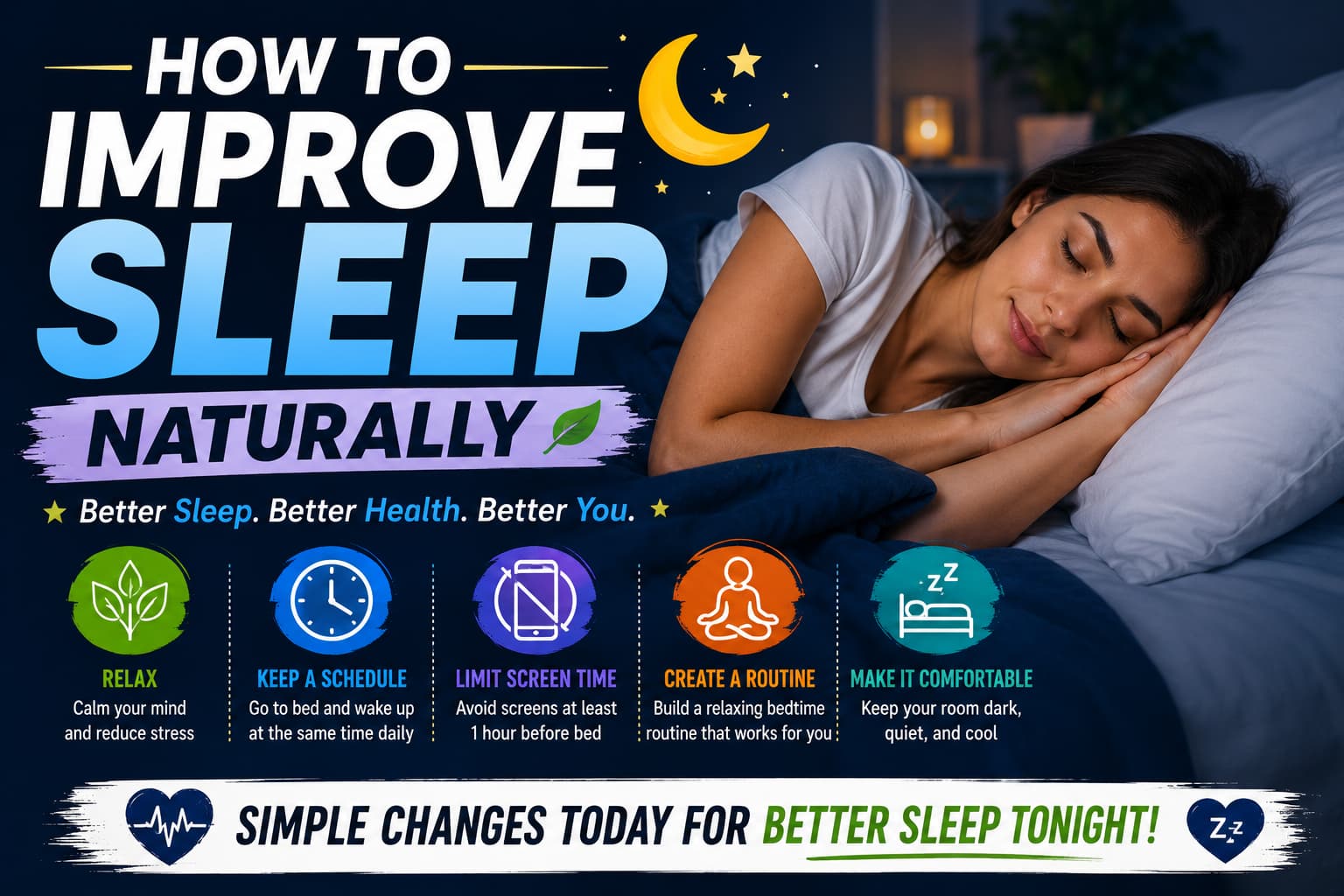
There’s a specific kind of tired that coffee just doesn’t touch. You slept, technically. Eight hours, maybe. But you wake up feeling like you ran a low-grade marathon in your sleep. Sound familiar?
Most people’s first instinct is to reach for something melatonin, a sleep tea, one of those weighted blankets. And sure, some of that helps a little. But in most cases, bad sleep isn’t a supplement problem. It’s a handful of everyday habits quietly working against you without you noticing. Fix those, and the sleep usually follows.
This is a rundown of how to improve sleep naturally nothing from a pharmacy, nothing expensive. Some of it you’ve probably heard before. Fair warning: most people know this stuff and still do the opposite every night.
Why Bother With “Natural” Instead of Just Taking Something
Sleep aids can get you through a rough patch, sure. But they don’t fix why sleep fell apart in the first place, and most aren’t really built for long-term, every-night use anyway.
Natural sleep habits work on a different level they deal with the actual stuff your body uses to manage rest: light, body temperature, hormone timing, stress. Mayo Clinic puts it simply: you can’t control everything that messes with your sleep work stress, family stuff, life but you can build habits that make good sleep more likely on most nights. Not every night. Most nights. That’s really the whole game here.

What Actually Helps
1. Pick a bedtime and wake time and don’t move it around much
This one’s boring, but it’s probably the single most effective thing on this list. Your body runs on an internal clock, and a schedule that shifts by two hours every weekend confuses it more than people realize. Most adults land somewhere around 7 to 8 hours a night. Not 10. Usually not 5, either, no matter how well you think you function on it.
2. Get outside earlier in the day
Morning light even just fifteen minutes of it, even on a cloudy day helps reset your internal clock. It tells your body “we’re awake now,” which, weirdly enough, makes it easier for your body to know when it’s time to wind down twelve hours later. Skip this step and your whole rhythm drifts.
3. Your afternoon coffee is later than you think it is
Caffeine sticks around in your system a lot longer than people assume sometimes 8 hours or more. That 3 p.m. coffee that felt totally fine? It might be exactly why 11 p.m. feels like staring at the ceiling.
4. Dim things down before bed
Light especially the blue light coming off your phone messes with melatonin, the hormone that basically tells your brain “okay, sleep now.” Dimming the lights and putting the phone away 30 to 60 minutes before bed gives melatonin room to actually build up instead of getting suppressed right when you need it most.
5. Cool, dark, quiet in that order of importance
Your body temperature naturally drops as you fall asleep, and a warm room fights that process. Somewhere around 60–67°F tends to work well for most people. Blackout curtains, an eye mask, a fan for white noise small stuff, but it adds up more than people expect.
6. Move during the day, not right before bed
Regular activity even just a daily walk is genuinely linked to better sleep. The catch is timing. Working out too close to bedtime raises your heart rate and body temp right when both need to be dropping. A few hours of buffer usually solves it.
7. Don’t eat a heavy meal at 10 p.m.
Spicy or fatty food close to bedtime can cause indigestion that keeps you shifting around half the night. Eating your last big meal a few hours before bed gives your stomach time to settle before you try to sleep on top of it.
8. Have some kind of wind-down routine, even a lazy one
Reading, stretching, a warm shower, herbal tea doesn’t matter much which one. What matters is doing roughly the same thing most nights, because that repetition is what tells your brain “sleep’s coming soon.” Consistency beats the specific activity every time.
A Basic Wind-Down Routine You Could Actually Stick To
| Time Before Bed | What To Do | Why It Works |
|---|---|---|
| 60 min | Dim the lights, phone goes away | Lets melatonin start building |
| 45 min | Warm shower | Kickstarts the body-temp drop |
| 30 min | Read or stretch, nothing intense | Slows the mind down |
| 15 min | Get into bed, breathe slowly | Settles the nervous system |
| Bedtime | Same time as always | Keeps your internal clock steady |
Habits That Quietly Wreck Sleep (Even Good Ones)
- “Just checking my phone for a second.” It’s never a second, and the light exposure works directly against you at the worst possible time.
- Long, late naps. A 20-minute nap at 1 p.m. is fine. A 90-minute nap at 6 p.m. basically steals from tonight’s sleep.
- Using alcohol to fall asleep faster. It might knock you out quicker, but it fragments sleep later in the night you wake up more, you just don’t remember it.
- Sleeping in on weekends. Feels earned, but it undoes five days of schedule consistency in about two mornings.
- An old, lumpy mattress you’ve just gotten used to. Easy to forget about, surprisingly common cause of restless nights.
FAQs
1. How long until I notice a difference? Some people feel a shift within a few days. For most, real, consistent improvement takes two to three weeks of sticking with the same habits not just trying them once.
2. Is napping bad for sleep? Not inherently. Short and early (20–30 minutes, before mid-afternoon) is generally fine. Long or late naps are the ones that tend to cause problems.
3. Does exercise actually help with sleep, or is that overstated? It genuinely helps. Regular moderate activity, like walking most days, is linked to better sleep quality just leave a few hours of buffer before bed so it doesn’t backfire.
4. What room temperature is actually best for sleep? Most experts land somewhere around 60–67°F. A room that’s too warm fights against the natural body-temperature drop your body needs to fall asleep.
5. When is it time to just see a doctor about this? If you’re doing most of this consistently and still struggling to fall or stay asleep, or it’s genuinely messing with your day-to-day life, that’s worth a real conversation with a doctor there could be something underlying that habits alone won’t fix.
Bottom Line
None of this is exciting. That’s kind of the point. Improving sleep naturally isn’t one big fix it’s a stack of small, unglamorous habits repeated on most nights: a steady schedule, some daylight, easing off screens and caffeine earlier than feels necessary, and a calm run-up to bed instead of a scramble. Give it a few consistent weeks before deciding whether it’s working. It usually is.