Somewhere around 3 PM, most people’s energy just falls off a cliff. That’s usually when the vending machine starts looking way more appealing than it should, and before you know it, you’re three chips deep into a bag you didn’t even want. The problem isn’t willpower it’s that most desk drawers are stocked with the wrong kind of snack to begin with.
Healthy office snacking isn’t complicated, but it does take a bit of planning. Here’s what actually works, and why some “healthy” options aren’t as helpful as they’re made out to be.
Why Office Snacking Goes Wrong So Easily
Offices are basically designed to wreck good intentions. There’s usually a candy bowl somewhere, a break room fridge full of other people’s leftovers, and a vending machine stocked with things that spike your blood sugar and drop you right back down an hour later. On top of that, stress eating is real a rough meeting or a tight deadline makes a bag of chips look a lot more comforting than it should.
The fix isn’t cutting out snacks altogether. It’s swapping in options that actually keep you full and focused instead of crashing you twenty minutes later.

What Makes a Snack Actually “Good” for Work
Not every snack labeled healthy is doing you favors at a desk job. The ones that hold up best usually combine protein or fiber with a bit of fat that combination is what slows digestion down and keeps you from getting hungry again right after. A snack that’s mostly sugar, even “natural” sugar from dried fruit, tends to spike and crash you the same way candy does.
If you’re also trying to balance overall eating habits beyond just snacking, our guide on building better daily eating habits covers the bigger picture.
Snacks Worth Keeping at Your Desk
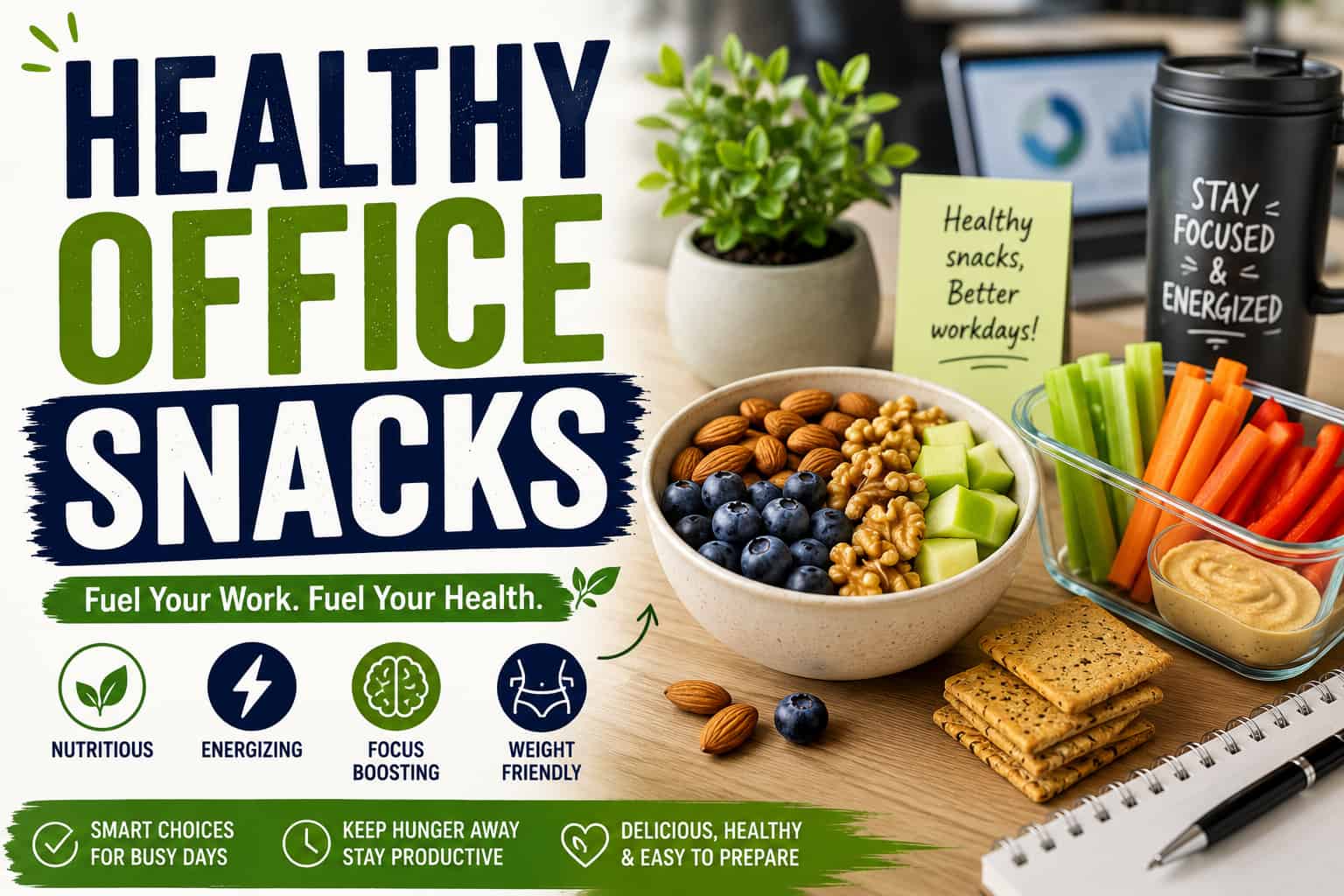
A few things hold up well without refrigeration and don’t make a mess of your keyboard:
- Roasted chickpeas or edamame
- Mixed nuts (unsalted, if you’re watching sodium)
- Whole grain crackers with nut butter packets
- Dark chocolate, in small portions
- Trail mix without the candy pieces mixed in
- Rice cakes with a savory topping like hummus
None of these need much prep, and most keep for weeks in a drawer without going stale too fast.
Snacks Worth Keeping in the Office Fridge
If your workplace has a shared fridge, a few more options open up:
- Greek yogurt, plain or lightly sweetened
- Hard-boiled eggs, prepped a few days ahead
- Cut vegetables with hummus or guacamole
- Cheese sticks or small cheese portions
- Fresh fruit apples and berries hold up better than bananas by midweek
Prepping a few days’ worth on Sunday saves a lot of decision fatigue during the week. It’s a lot easier to grab a container that’s already made than to talk yourself into something better at 3 PM when you’re tired.
A Quick Comparison
| Snack | Protein/Fiber | Prep Needed | Desk-Friendly |
|---|---|---|---|
| Roasted chickpeas | High fiber | Low | Yes |
| Greek yogurt | High protein | None (fridge needed) | With fridge |
| Mixed nuts | Protein + fat | None | Yes |
| Hard-boiled eggs | High protein | Some (batch prep) | With fridge |
| Fresh fruit | Fiber | None | Yes |
| Dark chocolate | Low, but slower sugar release | None | Yes |
Snacks That Look Healthy but Usually Aren’t
This is where a lot of people get tripped up. Granola bars marketed as “wholesome” are often closer to a candy bar in sugar content once you check the label. Flavored yogurts can carry more added sugar than a dessert. Dried fruit, while technically whole food, is calorie-dense and easy to overeat since the fiber-to-sugar ratio shifts once the water’s removed. None of these are off-limits exactly, but they’re worth reading labels on rather than assuming “natural” means low-sugar.
Portioning Actually Matters More Than People Think
Even a genuinely healthy snack causes problems if you’re eating straight from a family-size bag at your desk. Portioning nuts, crackers, or trail mix into small containers or bags ahead of time makes a real difference you’re far less likely to overeat something you’ve already measured out. It sounds like a small thing, but it’s one of the easier habits to actually stick to long term.
Timing Snacks Around Your Workday
Snacking isn’t just about what you eat, it’s also about when. A snack that combines protein and fiber about halfway between meals tends to prevent the energy crash better than waiting until you’re already starving. If lunch is at noon and you leave around 5, a snack around 3 usually lands at the right spot to keep focus steady through the afternoon slump.
FAQs
1. What’s the best snack for an afternoon energy slump? Something with protein and a bit of fiber works best nuts, Greek yogurt, or roasted chickpeas tend to hold energy steadier than anything sugar-heavy.
2. Are granola bars actually healthy office snacks? Some are, but many carry as much sugar as a candy bar. It’s worth checking the label rather than assuming the packaging claims are accurate.
3. How can I avoid mindless snacking at my desk? Portioning snacks ahead of time into small containers instead of keeping a large bag nearby makes a noticeable difference in how much you actually eat.
4. What snacks don’t need refrigeration for the office? Nuts, roasted chickpeas, whole grain crackers, dark chocolate, and rice cakes all hold up fine in a desk drawer for weeks.
5. Is dried fruit a good office snack? In small amounts, yes, but it’s easy to overeat since it’s calorie-dense once the water content is removed. Pairing it with nuts helps slow that down.
Final Thoughts
Healthy office snacking really comes down to two things: picking options with enough protein or fiber to actually hold you over, and keeping portions in check so you’re not eating straight from a bulk bag. None of it requires a big lifestyle change just a slightly better-stocked drawer and a few minutes of prep over the weekend. For more on keeping energy steady throughout a long workday, check out our guide on staying focused during long work hours.
External References: