
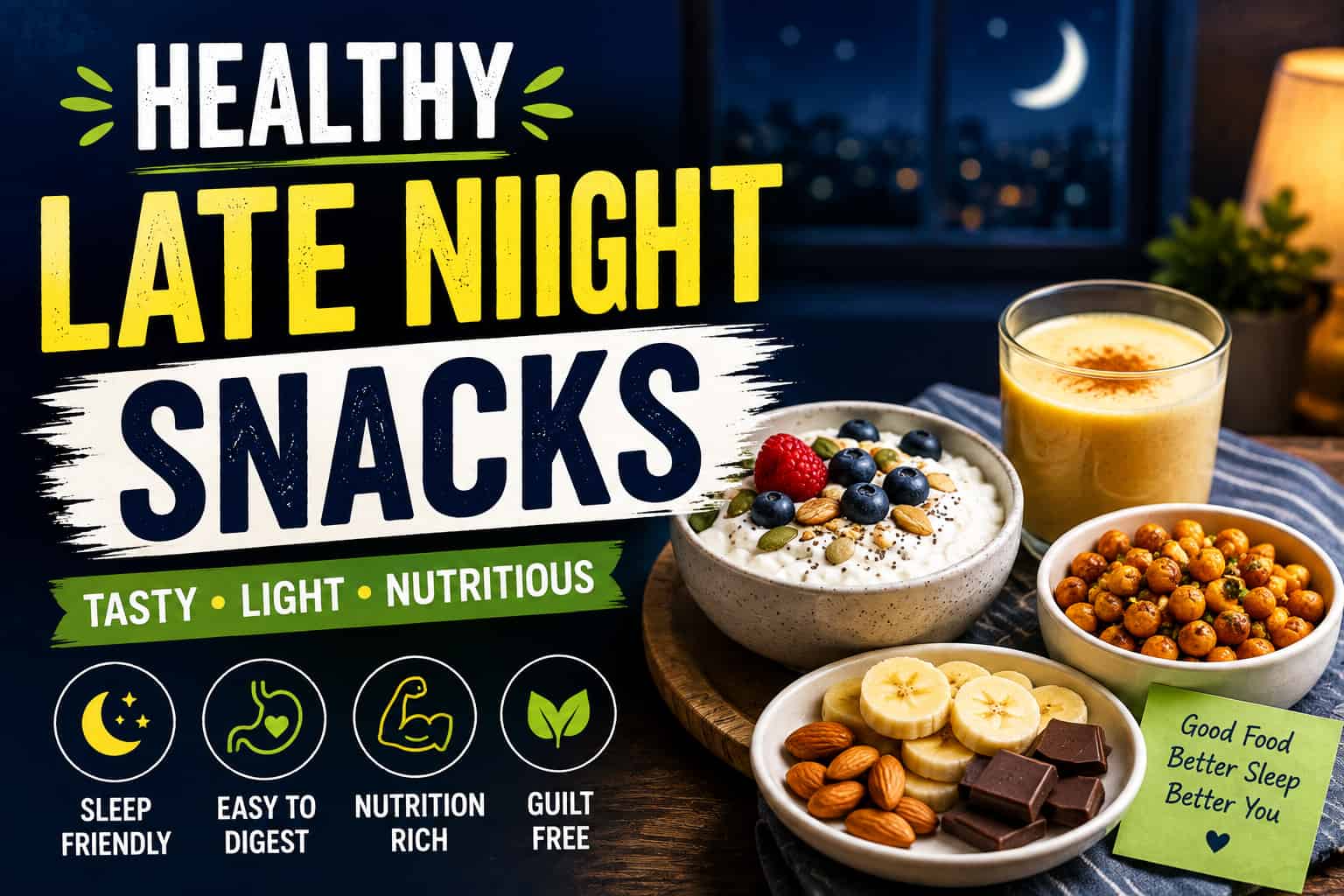
Let’s get one thing out of the way first: you don’t need to white-knuckle through hunger just because it’s 11 p.m. The old idea that “your stomach closes at 6 p.m.” isn’t really backed by anything solid if you’re genuinely hungry at night, your body still needs fuel. The real issue isn’t eating late, it’s what people usually reach for at that hour. Chips, ice cream, leftover pizza foods that are heavy, greasy, and take forever to digest, which is exactly what messes with sleep.
So the goal isn’t to skip snacking at night. It’s to pick something that satisfies you without leaving you bloated, wired, or wide awake at 2 a.m. Here’s what that actually looks like.
What Makes a Snack “Sleep-Friendly”
Before getting into specific foods, it helps to know what dietitians generally look for in a good late-night snack:
- Some protein keeps you full longer and helps stabilize blood sugar overnight.
- A bit of fiber or complex carbs slows digestion so you don’t get a sugar spike and crash.
- Not too much fat heavy, greasy foods sit in the stomach longer and can trigger reflux.
- Small portion generally under 200 calories is a reasonable target if you’re eating close to bedtime.
- Nothing too spicy, acidic, or heavily seasoned these are common reflux triggers, especially lying down soon after eating.
If a snack checks most of those boxes, it’s probably a decent choice.
Healthy Late Night Snacks to Try
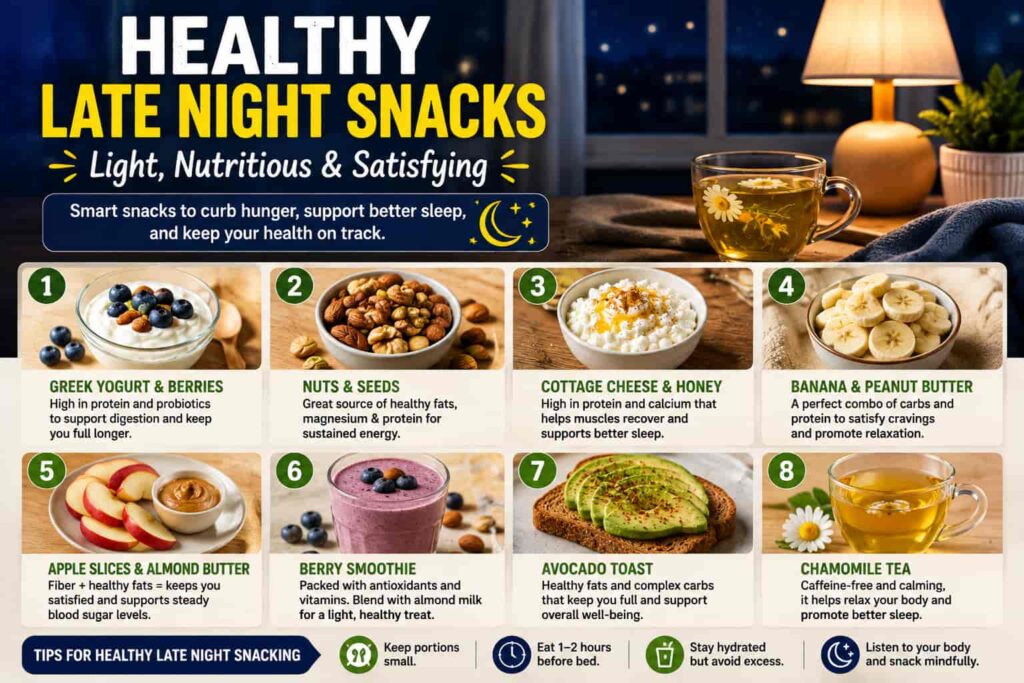
Greek yogurt with berries A solid mix of protein and natural sweetness, without the sugar crash you’d get from actual dessert.
Cottage cheese with fruit Cottage cheese is packed with protein (often 20+ grams a cup) and pairs well with something like sliced peaches or berries.
A small handful of nuts Almonds or walnuts bring healthy fats and a bit of protein; just watch the portion since nuts are calorie-dense.
Banana with a spoon of peanut butter Bananas contain potassium, which helps muscles relax, and the peanut butter adds staying power.
Whole grain toast with avocado Fiber from the toast plus healthy fats from the avocado; add a boiled egg on top if you’re hungrier than usual.
Edamame Protein, fiber, and a satisfying bit of crunch, especially good if you’re craving something to snack on slowly.
Warm milk or a turmeric latte Not a huge source of nutrients, but the ritual of a warm drink before bed genuinely helps some people wind down.
Tart cherries or cherry juice One of the few foods that naturally contains a small amount of melatonin, which is part of why they’re often mentioned for sleep.
Air-popped popcorn Whole grain, low calorie, and satisfying if you want something to actually chew on while watching TV.
Hummus with cucumber or carrots Fiber and plant protein without anything heavy or greasy weighing you down.
Quick Comparison: Late Night Snack Options
| Snack | Protein | Best For |
|---|---|---|
| Greek yogurt + berries | High | Sweet cravings |
| Cottage cheese + fruit | Very high | Staying full longer |
| Banana + peanut butter | Moderate | Muscle relaxation, sleep support |
| Whole grain toast + avocado | Moderate | Bigger appetite |
| Edamame | High | Savory, slow snacking |
| Warm milk / turmeric latte | Low | Winding down before bed |
| Tart cherries | Low | Natural melatonin boost |
| Air-popped popcorn | Low | Low-calorie crunch |
| Hummus + veggies | Moderate | Light, fiber-rich option |
Snacks Worth Skipping at Night
It’s not that these foods are “bad,” they just tend to backfire specifically at bedtime:
- Fried or greasy foods take longer to digest and are more likely to cause discomfort lying down.
- Spicy dishes a common trigger for acid reflux, especially soon before bed.
- Sugary desserts can spike blood sugar, then crash it a couple hours later, sometimes waking you up.
- Large portions in general even healthy food in a big quantity can leave you too full to sleep comfortably.
- Caffeine-containing snacks (dark chocolate included) worth avoiding within a few hours of bedtime if you’re sensitive to it.
If you want to dig deeper into how food timing affects rest, our guide to eating habits and better sleep goes into more detail on that connection.
Does Eating Late Actually Cause Weight Gain?
This gets debated a lot, and the honest answer is: it’s more about what and how much than the clock. Some research does suggest that people tend to make less healthy choices later at night, which is where the weight-gain association mostly comes from not some magical metabolic shutoff after a certain hour. If you’re eating a reasonable, balanced snack and it fits within your overall daily intake, timing alone isn’t the villain here. For more on building balanced meals throughout the day, check out our guide to simple healthy meal prep ideas.
FAQs
Is it bad to eat right before bed? Not necessarily. A small, balanced snack is usually fine. The bigger concern is eating a large, heavy meal right before lying down, which can cause discomfort or reflux.
What’s the best snack for hunger at night without ruining sleep? Something with protein and a little fiber Greek yogurt, cottage cheese, or a banana with peanut butter are all solid, easy options.
Do late night snacks cause weight gain? Not inherently. Weight gain is more closely tied to total daily calories and food quality than the specific time you eat.
Can certain foods actually help you sleep better? Some can help slightly tart cherries contain small amounts of melatonin, and warm milk or turmeric lattes have a calming, ritual effect for many people, though results vary person to person.
How much should I eat if I’m hungry late at night? Keeping it under roughly 200 calories is a reasonable guideline if you’re eating close to bedtime and want to avoid feeling too full to sleep.
Bottom Line
Being hungry at night doesn’t mean you have to choose between “ignore it” or “eat junk food.” A small, protein-and-fiber-focused snack can genuinely satisfy the craving without wrecking your sleep or your diet. Keep portions modest, skip the greasy and sugary stuff, and you’ll likely wake up feeling a lot better than after last night’s chip binge.
Sources referenced:


