
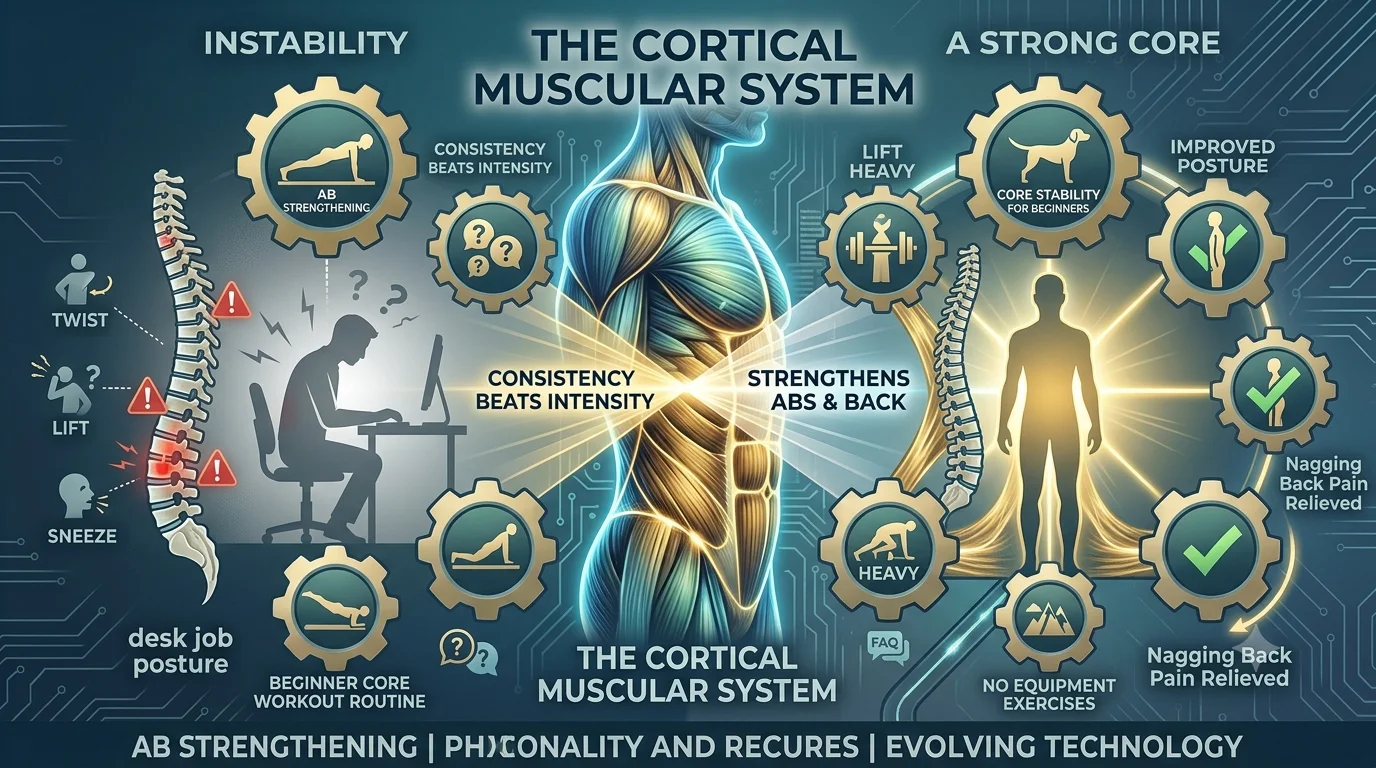
I’ll be honest, I used to think “core workouts” just meant crunches until my back basically forced me to learn otherwise. A few years of desk-job posture and zero attention to my midsection, and bending down to tie my shoes started feeling like a whole event. Sound familiar?
Turns out your core isn’t just about visible abs, though that’s usually what drags people in. It’s what holds your spine together when you lift, twist, or sneeze weirdly. Skip it long enough, and your back ends up picking up slack it was never built to carry.
So let’s get into what actually works, what doesn’t, and why most people train their core completely wrong without realizing it.
Why Your Core Does More Than You Think
Your core isn’t just your abs. People hear “core” and picture a six-pack, but really we’re talking about a whole muscular system — abs, obliques, lower back, even your hips to some extent. All of it works together to keep your spine stable through basically everything you do all day.
Weak core, weak everything else. Your back compensates, your posture slumps, and lifting something heavy off the floor starts feeling like a gamble instead of a normal task. That’s usually how people end up with nagging lower back pain that has nothing to do with an actual injury and everything to do with months of an undertrained midsection.
There’s also a balance piece nobody talks about enough. A strong core keeps you stable, whether you’re walking on uneven ground or just standing up too fast off the couch.
Ab Strengthening Exercises That Actually Deliver Results
Not all ab strengthening exercises pull their weight, honestly. Crunches get a ton of attention, but they barely scratch the surface compared to moves that engage your whole core at once.
Planks are the obvious one, and for good reason — they hit your abs, lower back, and shoulders at the same time without putting your spine through the repetitive strain crunches sometimes cause. Even thirty seconds done properly beats two minutes of sloppy crunches.
Dead bugs look almost silly when you first try them, lying on your back, moving your opposite arm and leg slowly while keeping your spine pinned to the floor. But they’re brutally effective for teaching your core to stabilize under controlled movement, which translates directly into real-life strength.
Bicycle crunches get a bad rap for being overdone, but done slowly, with control instead of speed, they actually target the obliques in a way few other moves manage.
Core Stability Training for Beginners
If you’re just starting, core stability training for beginners should skip straight past the flashy stuff. Forget weighted twists and fancy equipment for now. Master the basics first.
Bird dogs are a great entry point — on hands and knees, extending one arm and the opposite leg while keeping your hips level. Sounds easy. It’s not, really, once you focus on keeping everything stable instead of rushing through reps.
Glute bridges deserve more credit than they get, too. They’re technically a core move as much as a glute one, since holding that bridge position forces your entire midsection to engage to keep your hips from sagging.
Beginners often rush toward intensity before building any real control, and that’s backwards. Control first, intensity later. Your joints and your lower back will both thank you eventually.
Best Core Exercises That Don’t Require Equipment
Here’s some good news if your gym membership lapsed or you just train at home — some of the best core exercises don’t need a single piece of equipment.
Mountain climbers combine cardio with core work, keeping your heart rate up while your abs work overtime to stabilize your hips. Side planks target obliques specifically, an area regular planks honestly miss.
Hollow body holds, borrowed from gymnastics training, look deceptively simple but burn far more than expected within the first twenty seconds. Lying flat, lower back pressed down, arms and legs extended just off the ground — it’s harder than it sounds, trust me.
The beauty of bodyweight training here is that it scales naturally. Hold positions longer as you improve; no extra equipment required, ever.
Building a Core Workout Routine for a Stronger Back
A solid core workout routine for a stronger back shouldn’t just hammer your abs while ignoring everything behind them. Your lower back muscles need direct attention too, not just indirect engagement from ab work.
Supermans, lying face-down and lifting your arms and legs slightly off the floor, target the lower back directly in a way most ab-focused routines skip entirely. Bird dogs pull double duty here too, working both sides at once.
A reasonable starting routine: planks, bird dogs, glute bridges, and a few rounds of supermans, three or four times a week, give or take. Nothing extreme. Just consistent.
Common Mistakes That Slow Down Progress
A lot of people sabotage their own progress without realizing it. Going too fast through reps, holding your breath during planks, or skipping the lower back entirely while obsessing over visible abs — these quietly stall results. Form matters more than reps here, way more than people want to admit.
Conclusion
Honestly, real core strength isn’t about chasing a six-pack or grinding through a thousand crunches a day — it’s about building a midsection that actually holds up your spine and supports everything else your body does. Whether you’re doing ab strengthening exercises at the gym or core stability training for beginners at home with zero equipment, consistency beats intensity every time. Stick with the basics, keep your form tight, and your back will genuinely thank you for it.
FAQs
1. How often should I do core workouts each week? Three to four times a week works well for most people, with rest days in between so your muscles actually get a chance to recover and rebuild.
2. Can core workouts help with lower back pain? Yes, often. A weak core puts extra strain on your lower back, so strengthening it can relieve pressure and reduce nagging pain over time, though chronic pain should still be checked by a doctor.
3. Do I need equipment to build core strength? Not at all. Some of the best core exercises, like planks, dead bugs, and mountain climbers, rely entirely on bodyweight and work just fine at home.
4. How long until I notice results from core training? Most people feel improved stability and posture within a few weeks, though visible changes usually take longer and depend heavily on overall diet and activity level too.
5. Are crunches still worth doing? They’re not useless, but they’re far from the most effective option. Planks, dead bugs, and bird dogs generally deliver better results with less strain on your spine.