A friend of mine avoided the weight room for years. “Bulky” was the word she kept using — like one deadlift session might suddenly turn her into a bodybuilder overnight. She finally tried it at 34, mostly out of boredom more than anything, and a few months later, she was stronger than she’d ever been in her life. No bulk. None of the stuff she’d been picturing. Just… strong.
That myth has kept way too many women out of the weight room for way too long, honestly.
So if you’ve been eyeing the barbell section but never quite worked up the nerve, or you just don’t know where to even begin, stick around. This isn’t some boys’ club activity. It’s genuinely one of the better things you can do for your body, period.
Why Bother With Strength Training in the First Place
Here’s what muscle actually does beyond looking decent in a mirror: it protects your joints, keeps your bones dense, and props up your metabolism in ways cardio alone never quite manages. And it matters more as you age, since you start losing muscle naturally unless you’re doing something to fight that.
Then there’s the stuff nobody mentions in fitness articles — carrying four grocery bags at once without your arms giving out, getting off the floor without a dramatic groan, not throwing your back out because you bent wrong picking up a box. Strength training fixes that. Quietly, in the background, without you really noticing until one day you do.
Let’s Talk About the “Bulky” Myth
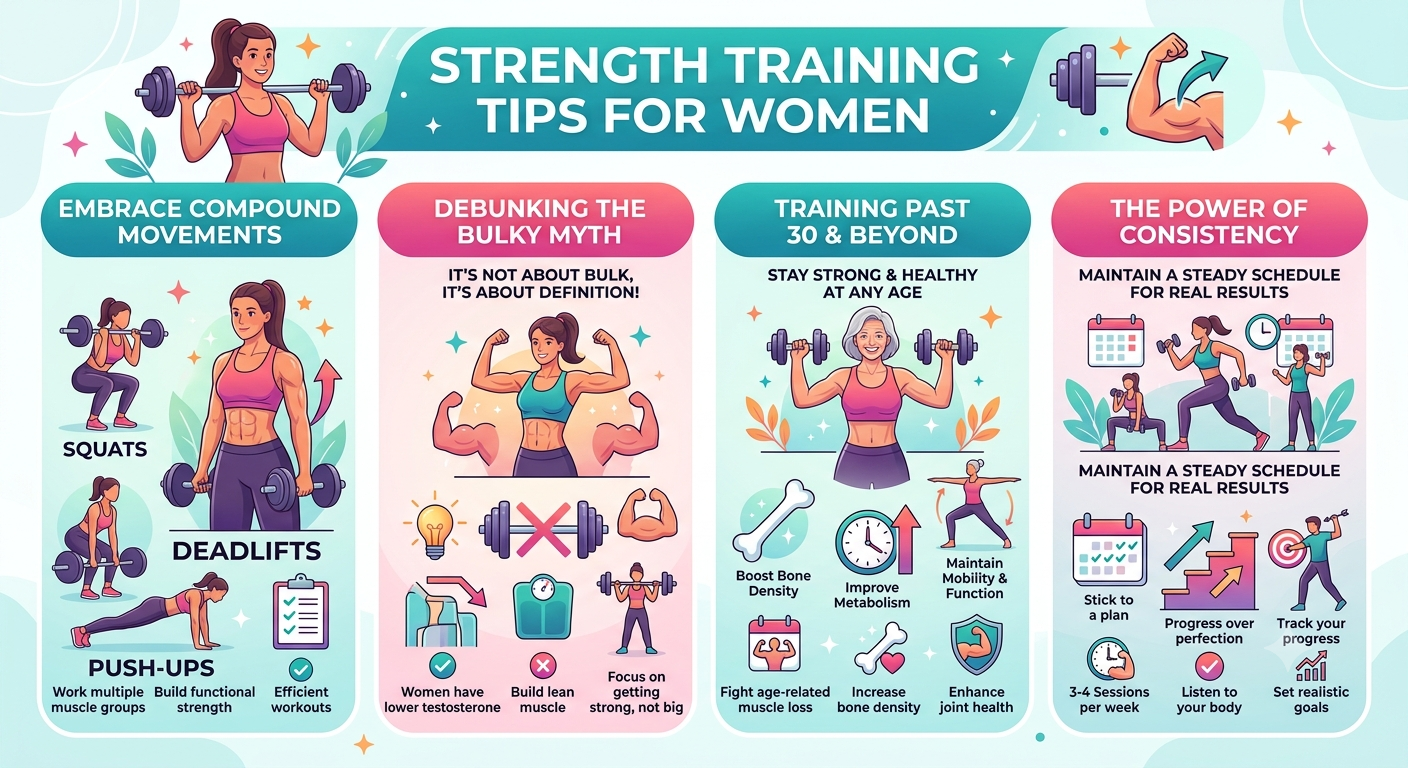
It comes up constantly, so let’s just deal with it head-on. Getting genuinely bulky takes a very specific combination — high training volume, a calorie surplus, often years of consistent effort. It doesn’t sneak up on anyone after three gym sessions. If anything, most women who lift regularly end up looking leaner, more defined, not bigger.
There’s a second myth tangled up in this one too: that cardio is somehow the “proper” way for women to lose weight, while lifting is optional or extra. Backwards, actually. Building muscle raises the number of calories your body burns just existing. Cardio and lifting aren’t competing teams here — they work a lot better together than people assume.
What a Beginner Workout Plan Should Actually Look Like
Nothing complicated, for starters. Two or three sessions a week built around compound movements — exercises that hit several muscle groups at once — cover most of what a beginner actually needs.
Squats. Deadlifts. Push-ups. Rows. These four alone form a pretty solid foundation, partly because they mirror things you already do in daily life: pushing, pulling, bending down. Start light, whether that’s bodyweight or a small dumbbell, get the form feeling natural, then add weight gradually once it starts feeling too easy.
And rest? Don’t skip it. Muscles actually rebuild while you’re resting, not mid-workout, so training hard every single day tends to backfire more than it helps.
Is Women’s Strength Training Actually Different?
Sort of, sort of not. Women generally carry less testosterone than men, which is the main reason building large amounts of muscle takes considerably longer and more deliberate effort. Good news, if “bulky” was ever the worry — it’s genuinely difficult to get there by accident.
Hormonal shifts across the month can mess with energy and strength too. Some weeks you’ll feel unstoppable, others you’ll struggle with weights that felt easy last Tuesday. That’s not failure, that’s just biology doing its thing.
Past that, though? The basics don’t really change. Progressive overload, decent form, showing up consistently — none of it cares what gender you are.
Training Past 30: What Shifts
Once you’re past 30, the goal quietly shifts from “looking a certain way” toward something more functional, even though the aesthetic perks usually stick around too. Bone density starts its slow decline around now, and lifting weights happens to be one of the most effective ways to slow that down.
Recovery also starts demanding a bit more respect than it used to. Warming up properly, actually sleeping enough, not skipping rest days just because you feel fine — all of it matters more than it did at 22, even if your body hasn’t fully clued you in yet. None of this makes training harder or less worthwhile. Just smarter.
Building Muscle: What Actually Moves the Needle
No secret trick here, just a few habits done consistently. Progressive overload — slowly adding weight, reps, or sets as you go — drives most of the actual growth. Protein matters a lot too, since your muscles literally need raw material to repair and grow back stronger after each session.
And consistency beats going hard occasionally, every time. Showing up for moderate sessions month after month will outpace the person doing brutal once-a-month workouts that leave them too wrecked to train again for a week.
Conclusion
Women don’t need to approach the weight room any differently out of fear or hesitation — strength training builds real, lasting capability, protects your health down the line, and just makes regular life easier. Start with the basics, show up consistently, and let go of the bulky myth completely; it’s simply not how this works for most people. Give it a few months. You’ll probably wonder why you waited this long.
FAQs
Will lifting weights actually make me bulky? Unlikely, honestly. Real muscle bulk needs a specific training and eating setup that goes way beyond a casual few-times-a-week routine.
How many days a week should a beginner train? Two or three is plenty to start. Gives your muscles room to recover while still building a real habit.
Is it safe to lift at different points in my cycle? Generally, yes. Energy might dip or spike depending on where you’re at in the month, so adjusting intensity slightly is normal, not a problem.
Do women really need a separate workout plan from men? Not especially. The core principles stay identical — differences mostly show up in pacing, recovery, and personal goals rather than the exercises themselves.
Where should women over 30 start? Compound lifts like squats and rows, two or three times a week, with real attention paid to recovery and sleep. That combination covers most of what matters early on.