Turning 40 doesn’t come with a manual. One day your usual workout feels fine, and the next, your knees are talking to you in ways they never did before. Sound familiar? You’re not imagining it, and you’re definitely not alone. Fitness over 40 genuinely works differently than it did in your 20s or even your 30s, and pretending otherwise is probably why so many people give up halfway through January.
Let’s talk about what’s actually going on in your body, and more importantly, what you can do about it without losing your mind — or your motivation.
Why Your Body Stops Cooperating the Way It Used To
Here’s the thing nobody tells you clearly enough: somewhere around your late 30s to early 40s, your body starts making quiet changes behind the scenes. Muscle mass naturally starts to decline if you’re not actively working against it — a process called sarcopenia, which sounds scarier than it is, but it’s real and it’s worth paying attention to.
Then there’s the hormone shift. For women, perimenopause and menopause bring fluctuating estrogen levels that affect everything from bone density to where your body decides to store fat. For men, testosterone gradually dips too, which can mean less energy and slower recovery after workouts. Add in joints that are a bit less forgiving and a metabolism that’s not quite as generous, and yeah — exercise after 40 needs a different game plan.
Metabolism Changes With Age — But It’s Not All Bad News
This is probably the part people stress about most. Metabolism changes with age, sure, but it’s not some unstoppable force dragging you toward weight gain no matter what. A big chunk of that “slowing metabolism” people complain about is actually just muscle loss — and muscle is metabolically active tissue. Less muscle, fewer calories burned at rest. Simple as that.
The good news? You can fight back against this. Strength training becomes less of an “extra” and more of a non-negotiable once you hit your 40s. It’s honestly one of the most underrated fitness tips for aging adults out there.
What Actually Works: Building a Smarter Routine
So what does staying active over 40 actually look like in practice? Forget the extreme bootcamp stuff for a second. Let’s break it down into pieces that fit real life.
Strength Training Isn’t Optional Anymore
If you only have time for one type of exercise, make it this. Lifting weights — or even just bodyweight resistance work like squats, push-ups, and planks — helps preserve the muscle mass you’re naturally losing. Two to three sessions a week is plenty for most people. You don’t need to become a powerlifter overnight; consistency beats intensity here, every single time.
Cardio, But Smarter
Long, grinding cardio sessions aren’t necessarily the answer anymore, especially if your joints are starting to protest. Mixing in low-impact options — swimming, cycling, brisk walking — keeps your heart healthy without hammering your knees and hips into submission. A best workout routine for adults over 40 usually blends both strength and cardio rather than picking one extreme.
Mobility and Recovery Deserve Real Attention
This is the piece people skip, and honestly, it’s the one that bites you later. Stretching, foam rolling, even just taking an extra rest day — these aren’t signs of weakness, they’re strategy. Recovery takes longer after 40, whether you like it or not, so respecting that instead of fighting it will keep you training consistently for years instead of crashing and burning in three months.
Nutrition Needs a Second Look Too
Protein intake matters more now than it did at 25 — it directly supports the muscle retention we keep coming back to. Pair that with steady hydration and you’re already covering two of the biggest gaps people have. No need for some complicated diet overhaul; small, sustainable shifts usually beat drastic ones anyway.
How Exercise Needs Change After Age 40, Realistically
Look, the honest truth is this: your 40-year-old body isn’t broken, it’s just operating under new rules. How exercise needs change after age 40 mostly comes down to prioritizing recovery, strength, and joint-friendly movement over sheer volume or intensity. Pushing through pain like you used to at 25 isn’t toughness anymore — it’s just asking for an injury that sidelines you for months.
Give your workouts a bit of grace. Some days will feel strong, others won’t, and that’s fine — give or take a few off days, the trend over months is what actually counts.
Managing Metabolism Changes With Age Without Obsessing Over It
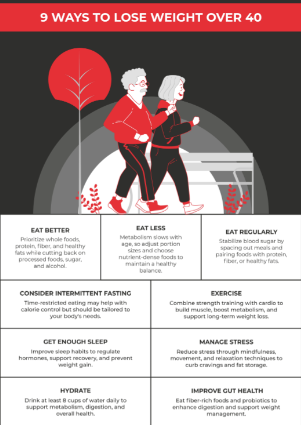
You don’t need to track every calorie or panic over a slower metabolism. Managing metabolism changes with age really just comes down to three things done consistently: lifting something heavy a couple times a week, eating enough protein, and not skipping sleep. Sleep, by the way, is wildly underrated — poor sleep messes with hunger hormones and recovery far more than people realize.
Conclusion
So, where does that leave you? Honestly, fitness over 40 just isn’t the same game as your 20s, and trying to force it to be is probably the fastest route to frustration. Lift heavy-ish stuff a couple times a week. Move your body in ways that don’t wreck your joints. Eat enough protein. Sleep like it actually matters, because it does. None of this is glamorous, and that’s kind of the point — the boring, repeatable stuff wins over time. Some weeks you’ll nail it, some weeks you won’t, and honestly? That’s fine too. Just keep showing up.
FAQs
1. Is it harder to lose weight after 40? Kind of, yeah — but not for the reasons most people assume. Muscle loss and shifting hormones slow things down a bit. Doesn’t mean it’s impossible though. Add some strength training, watch your protein, and you’ll notice the difference fairly quickly.
2. How many days a week should I work out after 40? Depends on the person, honestly. Somewhere between 3 and 5 days works for most — a mix of strength and lighter cardio, plus at least one day where you do basically nothing. Rest counts as training too.
3. Can I still build muscle after 40? Yes. Full stop. It might take a little longer to see the same gains you’d have seen at 25, but resistance training still works, no asterisks needed.
4. What’s the best type of exercise for someone over 40? There isn’t really one “best” — anyone who tells you otherwise is selling something. A blend of strength work, low-impact cardio, and a little mobility training covers most of what your body actually needs.
5. Why do I feel more sore or tired after workouts now? Recovery just takes longer once you hit your 40s — that’s hormones and cellular changes doing their thing. Sleep more if you can, stay hydrated, and don’t skip those rest days. They’re doing more work than you think.