

Almost everyone who tries running quits before it gets easy. Not because they’re lazy, but because they start too fast, too often, and expect too much from their body in the first week. Sore knees, burning lungs, that “why does everyone else make this look easy” feeling it adds up, and the shoes end up back in the closet.
Here’s the thing though: running doesn’t have to feel like punishment. If you ease into it the right way, it can actually become the part of your day you look forward to. This guide walks through how to start running for beginners without wrecking your motivation (or your knees) in the process.
Why Bother With Running At All
Running is cheap, it’s flexible, and it works. No gym membership, no equipment beyond a decent pair of shoes, no waiting for a class to start. You just… go.
The CDC recommends adults get at least 150 minutes of moderate aerobic activity a week, and running gets you there faster than most other options a 20-minute run can cover what a 40-minute walk does. There’s also the less obvious stuff: better sleep, lower stress, a heart that doesn’t have to work as hard for everyday tasks. None of that shows up in week one, but it’s real, and it’s a big part of why people who push through the awkward early phase tend to stick with it for years.
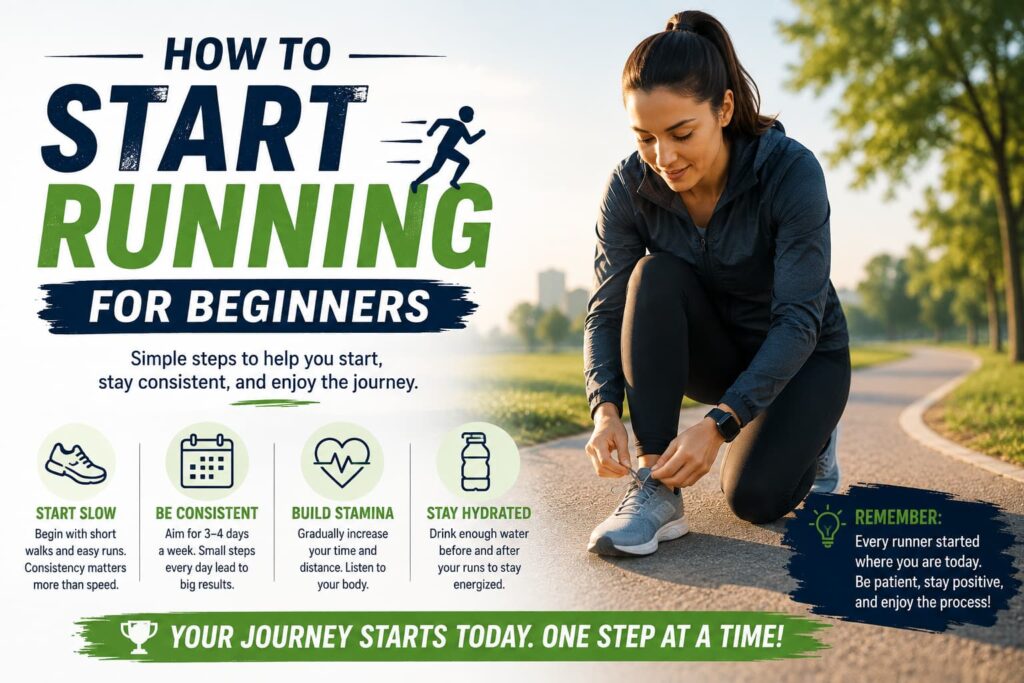
How to Actually Start (Without Hating It)
1. Buy real running shoes before you buy anything else
Whatever sneakers are sitting by your door probably aren’t built for repeated impact. Cheap or worn-out shoes are one of the fastest ways to end up with shin splints or achy knees in week two. You don’t need the most expensive pair on the shelf just something made for running, fitted properly.
2. Walk-run, don’t just run
This is the one thing almost every beginner skips, and it’s probably the most important. Alternate short bursts of jogging with walking breaks. Your lungs and joints aren’t ready for 20 straight minutes of running yet, and that’s completely normal everyone starts here, including people who now run marathons.
3. Go by minutes, not miles
Forget distance for now. In the early weeks, the goal is just staying active for a set amount of time. Chasing a mile count too early is how people end up injured or discouraged by week three.
4. Don’t skip the warm-up
A few minutes of brisk walking or light movement before you start (and a slow walk to cool down after) makes a real difference in how your body handles the run. It’s boring, it feels unnecessary, and it genuinely helps.
5. Breathe however feels natural
You don’t need a special breathing technique as a beginner. Nose, mouth, some combination of both whatever’s comfortable. It’ll smooth out on its own as your fitness improves.
6. Give yourself rest days
This trips people up because it feels counterproductive. But your body actually builds fitness during rest, not during the run. Three running days a week with rest or light walking in between is plenty to start.
A No-Pressure 4-Week Plan
Nothing fancy here just a gradual shift from mostly walking to mostly jogging.
| Week | What You’re Doing | Frequency | Total Time |
|---|---|---|---|
| 1 | Walk 4 min, jog 1 min (repeat) | 3x/week | ~20 minutes |
| 2 | Walk 3 min, jog 2 min (repeat) | 3x/week | ~22 minutes |
| 3 | Walk 2 min, jog 3 min (repeat) | 3x/week | ~25 minutes |
| 4 | Walk 1 min, jog 4 min (repeat) | 3x/week | ~28 minutes |
This kind of run-walk buildup isn’t something we invented it’s basically the same logic behind Mayo Clinic’s well-known 5K training schedule, which leans on gradual intervals and rest days specifically to keep injury risk low for people just starting out.
Mistakes That Trip Up Almost Every New Runner
- Going too fast early on. A pace you can actually hold beats a fast pace you collapse from after 90 seconds.
- Running every single day. More isn’t better here it’s how overuse injuries happen.
- Wearing shoes long past their expiration. Cushioning breaks down around 300–500 miles, even if the shoes still look fine.
- Pushing through sharp pain. Some soreness is normal. Sharp, localized pain is your body telling you to stop.
- Comparing your week one to someone else’s year three. Not helpful, not accurate, not worth the discouragement.
Staying Motivated Once the Novelty Wears Off
Week one is usually easy there’s excitement, maybe new shoes, a bit of momentum. Week three is where most people fall off. What tends to help: picking a fixed time of day so it’s not a daily decision, jotting down progress somewhere (even just a notes app), and running with someone else occasionally so it’s not a solo grind every time. Small wins matter more than they seem jogging one extra minute than last week is real progress, even if it doesn’t feel like much in the moment.
FAQs
1. How many days a week should a beginner run? Three is a solid starting point. It’s enough to build fitness without overloading joints that aren’t used to the impact yet.
2. Is it normal to feel completely out of breath as a new runner? Yes, and it’s one of the most common reasons people think they’re “not built for running.” Give it three or four consistent weeks breathing usually gets noticeably easier.
3. How long before running actually feels easier? Most people notice a real shift around the three-to-four-week mark, assuming they’re sticking to a walk-run routine and not skipping rest days.
4. Can beginners run every day? It’s not recommended. New runners are more injury-prone, and daily running doesn’t leave time for the recovery that actually builds fitness.
5. What’s the best time of day to run? Whatever time you’ll actually show up for. Morning, evening, lunch break the “best” time is the one that fits your schedule consistently, not some ideal hour on paper.