There’s a specific kind of hunger that hits around 4 p.m. not quite dinner-time hunger, just enough to make you start opening cabinets looking for something, anything. Most people reach for chips or cookies in that moment, not because they’re bad at eating well, but because those are usually the easiest things sitting around.
The good news is that healthy low calorie snacks don’t have to mean carrot sticks and sadness. Done right, they can genuinely satisfy a craving, keep you full for hours, and still leave plenty of room in your daily calories for actual meals. The trick is less about restriction and more about picking snacks that pull double duty protein, fiber, and a little healthy fat, all in one small bite.
Why Most “Diet Snacks” Don’t Actually Work
A lot of low-calorie snacks fail for a simple reason they’re low in calories but also low in everything else. A handful of rice cakes might only cost you 60 calories, but if there’s no protein or fiber involved, you’re hungry again twenty minutes later, and probably reaching for something else on top of it.
Registered dietitians generally agree that the best snacks aren’t just about the calorie number they combine protein, fiber, and healthy fat, which is what actually keeps hunger away. A snack built around just one of those tends to disappear fast and leave you no better off than before you ate it.
Smart Low-Calorie Snacks Worth Keeping Around
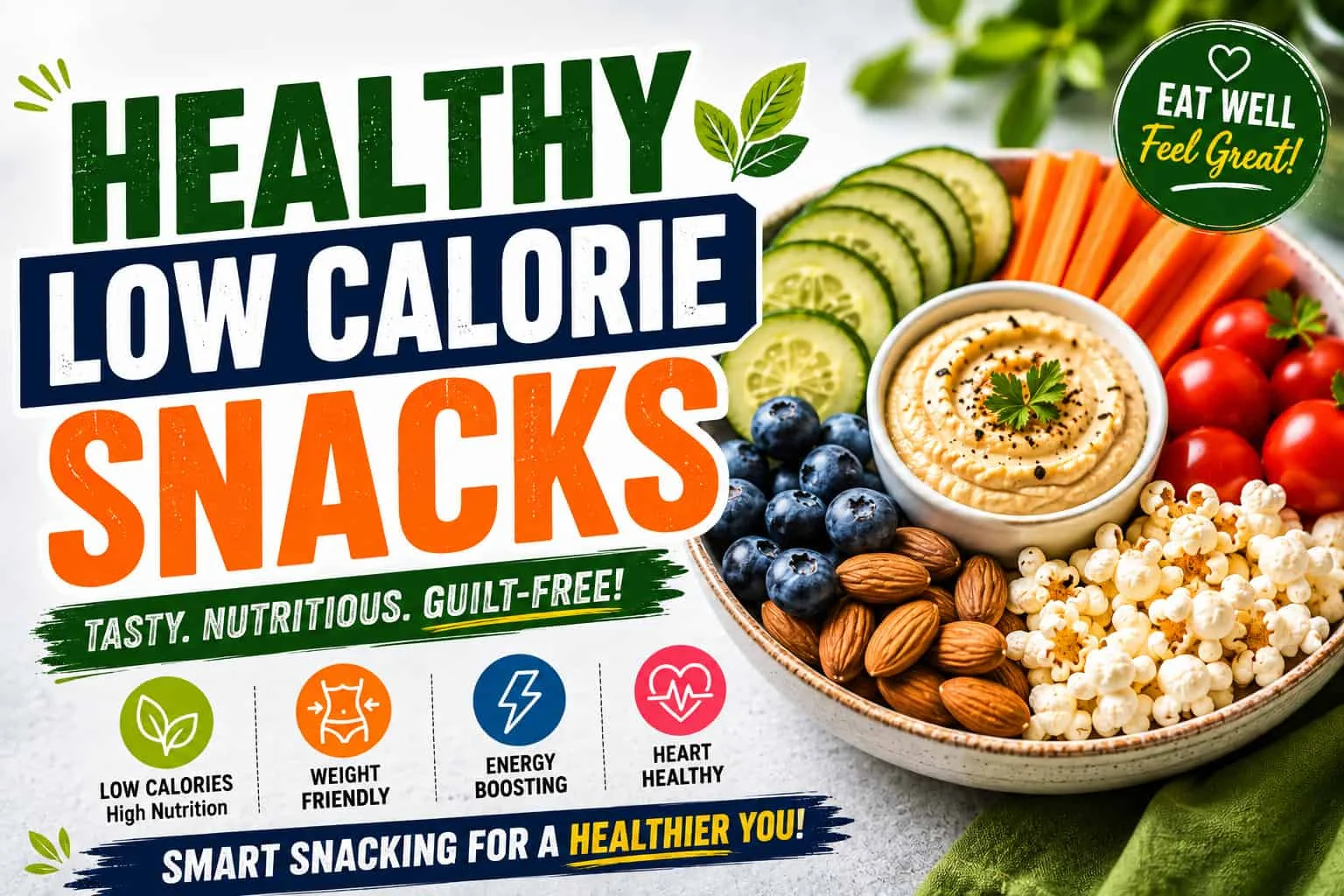
Here are combinations that consistently show up as go-to choices for staying full without overdoing calories, most landing in the 100–200 calorie range:
- Apple slices with a tablespoon of peanut butter fiber plus protein and healthy fat in one
- A small handful of almonds (about 20–23) dense in protein and good fats, easy to portion
- Greek yogurt with berries and a sprinkle of granola high protein, naturally sweet
- Raw veggies with hummus carrots, bell peppers, or cherry tomatoes work well
- A hard-boiled egg with a few almonds simple, portable, protein-heavy
- Air-popped popcorn with a little parmesan high volume, genuinely filling, low calorie
- Edamame half a cup delivers a solid dose of plant protein and fiber
- Cottage cheese with fruit protein-rich and easy to prep ahead
None of these require much effort, which matters more than people admit the easiest snack in the kitchen usually wins, so it helps if the easy option is also a good one.

What to Actually Look For When Choosing a Snack
Rather than memorizing a list, it’s more useful to know what makes a snack “good” in the first place. A few things to check:
- Protein or fiber (ideally both) this is what actually creates fullness
- Reasonable portion size even healthy foods add up if eaten without any limit
- Minimal added sugar many “healthy” packaged snacks quietly pack in a lot of it
- Whole, recognizable ingredients fewer processed additives generally means more nutritional value per calorie
A good rule of thumb that shows up often in nutrition guidance: aim for snacks around 200 calories or less, since that keeps snacking to roughly 10% of a typical day’s calorie intake, leaving plenty of room for real meals.
Quick Reference: Snack Ideas at a Glance
| Snack | Approx. Calories | Why It Works |
|---|---|---|
| Apple + 1 tbsp peanut butter | 150–180 | Fiber + protein + healthy fat |
| Small handful of almonds | 130–160 | Protein, healthy fat, easy to portion |
| Greek yogurt + berries | 120–150 | High protein, naturally sweet |
| Veggies + hummus (1/4 cup) | 100–150 | High fiber, low calorie density |
| Hard-boiled egg + almonds | 150 | Balanced protein source |
| Air-popped popcorn + parmesan | 100–130 | High volume, satisfying to chew |
| Edamame (1/2 cup) | 100 | Plant protein and fiber |
Simple Habits That Make Snacking Easier
Choosing the right snack matters, but a few small habits make the whole thing easier to stick with:
- Portion snacks ahead of time instead of eating straight from the bag it’s easy to lose track otherwise
- Pair a carb with a protein or fat, rather than eating one alone
- Drink water first if you’re not sure whether you’re actually hungry or just thirsty
- Keep easy options visible pre-cut veggies or portioned nuts in the fridge get eaten more than the ones buried in the back
None of this requires a complicated meal-prep routine. Most of it is just making the better option the easier one to reach for. If you’re also working on portion control at meals, our guide on building a balanced plate for weight management pairs well with this.
The Bottom Line
Low-calorie snacking isn’t about eating less it’s about eating smarter. A snack built around protein, fiber, and a bit of healthy fat will keep you full far longer than one built around empty carbs, even at a similar calorie count. Keep a few go-to options on hand, watch your portions, and snacking stops being the thing that derails your day.
For more detailed, dietitian-reviewed snack ideas, Harvard Health has a solid breakdown worth reading: Low-Calorie Snacks: Healthy, Delicious, and Satisfying Options.
Frequently Asked Questions
1. What’s considered a healthy low-calorie snack? Generally, a snack under 200 calories that includes protein, fiber, or healthy fat ideally a combination rather than just empty carbs or added sugar.
2. What snacks help you stay full the longest? Snacks combining protein and fiber, like Greek yogurt with berries or apple slices with peanut butter, tend to keep hunger away far longer than sugary or refined-carb snacks.
3. Are nuts a good low-calorie snack option? Yes, in moderate portions. A small handful of almonds or walnuts offers protein, fiber, and healthy fats, though calories can add up quickly if portions aren’t measured.
4. How many calories should a snack have? A common guideline is to keep snacks around 200 calories or fewer, so they make up roughly 10% of a typical day’s calorie intake.
5. What are good low-calorie snacks for late-night cravings? Options like air-popped popcorn, a small portion of cottage cheese with fruit, or veggies with hummus tend to satisfy cravings without adding excessive calories before bed.