Not all snacks are created equal, even when the calorie count looks the same. A 200-calorie bag of pretzels and a 200-calorie handful of almonds might sit next to each other on a nutrition label, but one is basically just carbs, and the other is quietly doing a lot more work protein, healthy fats, fiber, vitamin E, magnesium. Same number, very different outcome for your body.
That difference is what “nutrient density” actually means. It’s not about eating less. It’s about making sure the calories you do eat are pulling their weight. And once you start thinking about snacks that way, it changes what ends up in your pantry.
What “Nutrient Dense” Actually Means
The basic idea is simple: a nutrient-dense food delivers a lot of vitamins, minerals, protein, or fiber relative to how many calories it contains. On the flip side, foods with plenty of calories but very little nutritional payoff are often described as “empty calorie” foods think white bread, potato chips, or most fruit snacks.
Fruits, vegetables, whole grains, lean proteins, nuts, seeds, and beans are generally considered the core of nutrient-dense eating. That doesn’t mean higher-calorie foods are automatically disqualified, either something like peanut butter or avocado has more calories than kale, but it’s still packed with real nutritional value, just delivered differently.
Why This Matters More at Snack Time Than at Meals
Snacking has quietly become a big chunk of how people eat. For a lot of households, snacks aren’t just something extra between meals anymore they’re replacing entire meals on busy days. The problem is that traditional snack foods (chips, cookies, sugary drinks) tend to be high in calories, sodium, and added sugar, but genuinely low in anything your body can use.
That’s exactly the gap nutrient-dense snacking is meant to close. The goal isn’t to snack less it’s to make the snacking that’s already happening actually count for something.

Nutrient Dense Snacks Worth Keeping on Hand
Here are combinations that consistently show up as smart, nutrient-rich choices:
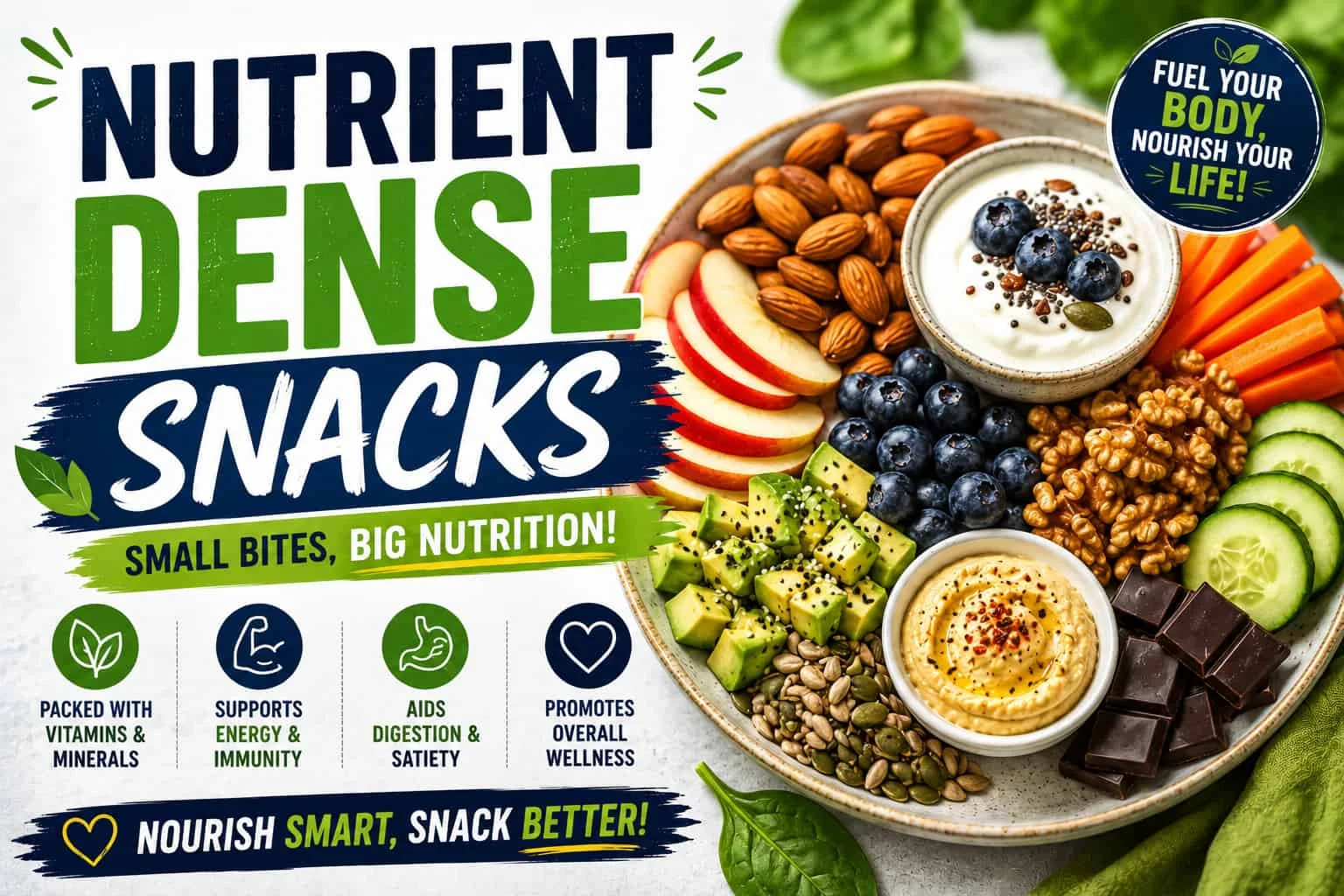
- A small handful of almonds or walnuts protein, healthy fats, vitamin E, and magnesium in one bite
- Apple slices with almond or peanut butter fiber plus protein and healthy fat
- Greek yogurt with berries high protein, antioxidants, naturally sweet
- Hard-boiled eggs one of the most complete, portable protein sources around
- Hummus with raw vegetables plant protein, fiber, and vitamins from the veggies themselves
- Edamame a genuinely underrated source of plant protein and fiber
- Cottage cheese with fruit high in protein, calcium, and easy to prep ahead
- Trail mix with nuts, seeds, and a little dried fruit a good mix of fats, protein, and micronutrients, as long as it’s not loaded with candy
None of these are complicated. That’s actually the point the more effort a snack takes, the less likely it is to survive a genuinely busy week.
How to Spot a Nutrient-Dense Snack Without Overthinking It
You don’t need to memorize a master list to eat this way consistently. A few quick checks work almost every time:
- Does it have protein or fiber? These are the nutrients that actually create fullness
- Is it close to its whole, original form? An apple is nutrient dense; apple-flavored fruit snacks generally aren’t
- Does the ingredient list stay short? Long lists usually mean more fillers, less actual nutrition
- Is it low in added sugar? Even “health food” snacks can quietly pack in a lot of it
Checking the Nutrition Facts label for calories relative to protein, fiber, and vitamins gives a pretty quick read on whether something is actually earning its calories or just filling space.
Quick Reference: Nutrient Dense Snack Ideas
| Snack | Key Nutrients | Why It’s Nutrient Dense |
|---|---|---|
| Almonds (small handful) | Protein, healthy fats, vitamin E, magnesium | High nutrient payoff per calorie |
| Apple + nut butter | Fiber, protein, healthy fat | Balanced macros, real food |
| Greek yogurt + berries | Protein, calcium, antioxidants | Naturally nutrient-rich, low added sugar |
| Hard-boiled egg | Complete protein, choline, vitamin D | Whole food, minimal prep |
| Hummus + veggies | Plant protein, fiber, vitamins | Nutrients from both dip and veggies |
| Edamame | Plant protein, fiber, folate | Often overlooked, very nutrient-dense |
| Cottage cheese + fruit | Protein, calcium, vitamin C | High protein per calorie |
A Few Things Worth Avoiding
- Relying on “low-fat” or “diet” labels as a shortcut these often replace fat with added sugar, which lowers nutrient density even if calories look similar
- Treating dried fruit as a free pass it’s more nutrient-dense than candy, but sugar and calories add up fast if eaten by the handful
- Skipping protein entirely a snack of just fruit or just crackers digests fast and leaves you hungry again quickly
- Assuming “natural” always means nutrient-dense some natural snacks are still mostly sugar and starch
If you’re also trying to manage overall calorie intake alongside nutrient density, our guide on healthy low calorie snacks that keep you full pairs well with this approach.
The Bottom Line
Nutrient-dense snacking isn’t a diet trend it’s really just a shift in priorities. Instead of asking “how few calories does this have,” the better question is “how much is this snack actually giving me for those calories.” A handful of almonds, an egg, some yogurt with fruit none of it is complicated, but consistently choosing foods like these adds up to a real difference in energy, fullness, and long-term nutrition.
For a deeper, science-backed breakdown of nutrient density and how to apply it daily, the American Heart Association has a clear explainer worth reading: How Can I Eat More Nutrient-Dense Foods?
Frequently Asked Questions
1. What does “nutrient dense” actually mean? It means a food provides a high amount of vitamins, minerals, protein, or fiber relative to its calorie count, rather than calories with little nutritional value.
2. What are examples of nutrient dense snacks? Almonds, hard-boiled eggs, Greek yogurt with berries, hummus with vegetables, and edamame are all commonly cited as strong nutrient-dense choices.
3. Are nutrient dense snacks always low in calories? Not necessarily. Foods like nuts, nut butter, and avocado are higher in calories but still highly nutrient-dense because of the vitamins, minerals, and healthy fats they provide.
4. How is a nutrient dense snack different from a low-calorie snack? A low-calorie snack focuses on minimizing calories, while a nutrient-dense snack focuses on maximizing nutritional value per calorie the two often overlap, but not always.
5. What’s the easiest way to add more nutrient dense snacks to my day? Keep simple, minimally processed options on hand like pre-portioned nuts, cut vegetables, or hard-boiled eggs so they’re as convenient to grab as less nutritious alternatives.