Most people don’t struggle with eating healthy because they lack willpower. They struggle because their pantry doesn’t have the right ingredients on hand when hunger hits, and takeout ends up being the easiest option. A well-stocked pantry solves that problem quietly, in the background, without needing much thought once it’s set up properly.
This isn’t about buying every “superfood” on the shelf either. It’s about having a handful of reliable, versatile ingredients that make it easy to throw together a decent meal on a random Tuesday night.
Why the Pantry Matters More Than People Realize
Fresh produce gets a lot of attention when people talk about healthy eating, and fair enough, it matters. But fresh food runs out fast, and on the days it does, what’s sitting in the pantry decides whether dinner is something reasonable or something ordered through an app. A good pantry acts like a safety net it keeps meals balanced even when the fridge is nearly empty.
Quick Reference: Core Pantry Categories
| Category | Examples | Why Keep It Stocked |
|---|---|---|
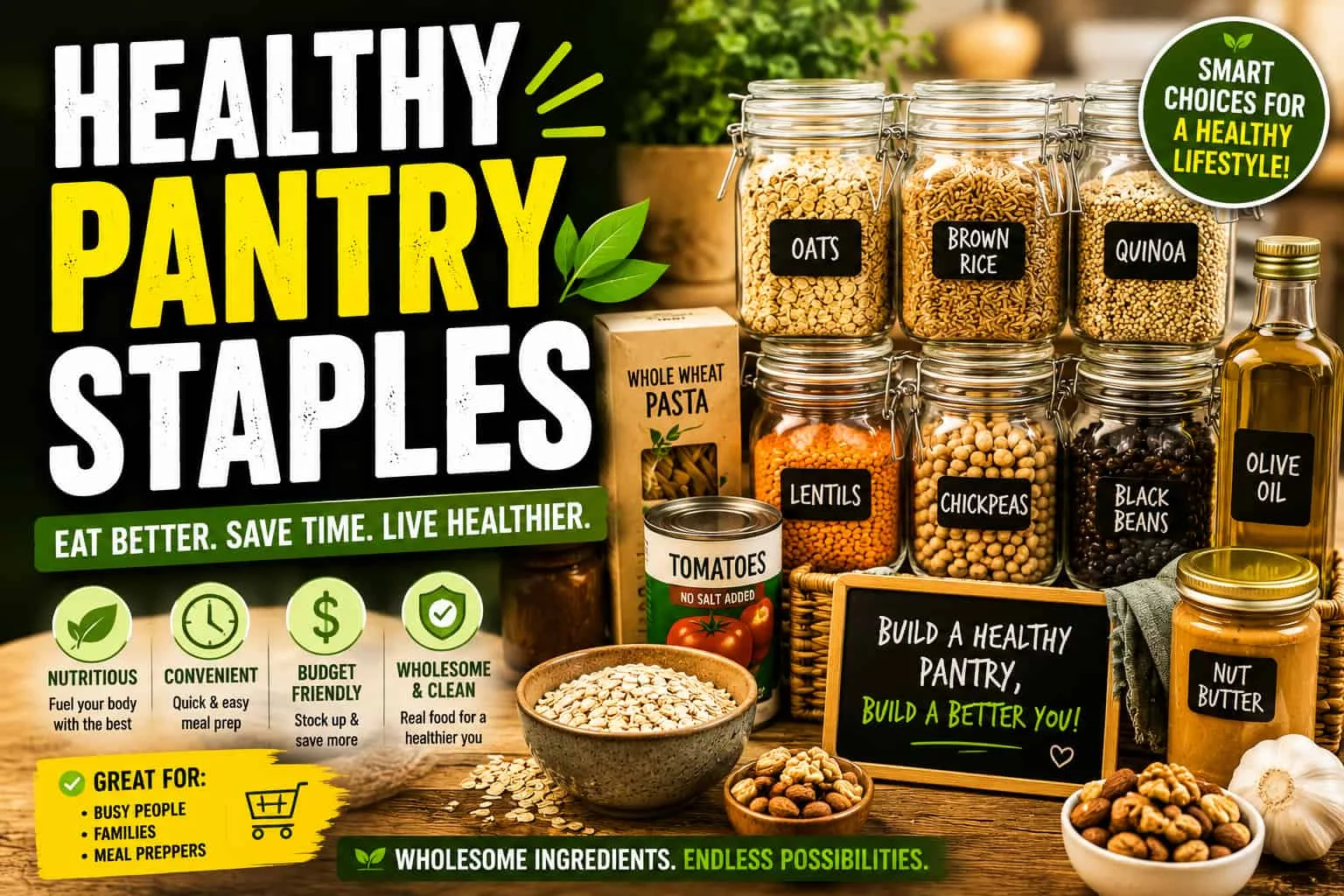
| Whole Grains | Brown rice, oats, quinoa, whole wheat pasta | Provide fiber and steady energy, form the base of most meals |
| Legumes | Canned beans, lentils, chickpeas | Cheap protein source, long shelf life, filling |
| Healthy Fats | Olive oil, nuts, seeds | Support heart health, add flavor without needing much |
| Canned/Jarred Staples | Tomatoes, tuna, low-sodium broth | Quick base for soups, sauces, and stir-fries |
| Seasonings | Garlic, onion powder, herbs, spices | Makes simple ingredients actually taste like something |
Whole Grains: The Backbone of Most Meals
Brown rice, rolled oats, whole wheat pasta, and quinoa are about as reliable as pantry staples get. They store for months, cook in under 20 minutes in most cases, and give meals the kind of steady, slow-digesting energy that white bread and instant noodles just don’t. Oats in particular are worth keeping around for more than breakfast they work fine in baking or even as a thickener in some soups.
Buying grains in bulk usually saves money too, as long as they’re stored in an airtight container somewhere cool and dry.
Legumes: Cheap, Filling, and Underrated
Canned beans, lentils, and chickpeas don’t get nearly enough credit. They’re loaded with plant-based protein and fiber, they’re some of the cheapest items in the grocery store, and they last practically forever in the pantry. A can of chickpeas can turn into a quick curry, a mashed sandwich filling, or a roasted snack in about the same time it takes to boil pasta.
Dried lentils cook faster than most people expect too usually 20 to 30 minutes, no soaking required which makes them a solid backup when canned options run out.
Healthy Fats Worth Keeping Around
Not all fats belong in the “avoid” category, and a good pantry needs a few reliable sources. Extra virgin olive oil is the obvious one, useful for cooking and dressing alike. Nuts and seeds almonds, walnuts, chia, flax add texture and healthy fats to otherwise plain meals, whether that’s oatmeal, salads, or just a handful as a snack. These items don’t need much space, but they make a noticeable difference in how satisfying a meal feels.

Canned and Jarred Staples That Actually Get Used
Canned tomatoes, canned tuna or salmon, and low-sodium broth are the kind of items that quietly hold together a huge number of meals. A can of tomatoes becomes pasta sauce, soup base, or a quick shakshuka. Broth turns leftover vegetables and grains into something that actually resembles a meal instead of scraps. Tuna or salmon adds protein to a meal in under a minute, no cooking required.
The key with canned goods is checking sodium content, since some brands pack in a lot more salt than necessary. Low-sodium versions let you control seasoning yourself.
Don’t Underestimate Seasonings
A pantry full of grains and beans still tastes bland without decent seasoning. Garlic, onion powder, cumin, paprika, and a few dried herbs go a long way toward making simple ingredients taste like an actual meal rather than something eaten out of obligation. This is honestly one of the most overlooked parts of building a healthy pantry people focus so much on the “healthy” ingredients that meals end up tasting flat, which makes the whole habit harder to stick with.
Building the Pantry Without Overspending
- Buy grains, beans, and oats in bulk when possible, since they store well
- Stick to a handful of reliable staples instead of buying every trending ingredient
- Rotate older items to the front so nothing expires unused
- Check sales on canned goods and stock up when prices drop
- Keep a small running list of what’s running low, so shopping trips stay quick
The Bottom Line
A healthy pantry isn’t about having everything it’s about having the right basics that combine easily into decent meals. Grains, legumes, healthy fats, a few canned staples, and decent seasoning cover most of what a home cook actually needs. Once that foundation is in place, cooking something reasonable on a busy night stops being a struggle and starts being the default option.
Frequently Asked Questions
1. What are the most important healthy pantry staples to start with? Whole grains, canned or dried legumes, olive oil, canned tomatoes, and basic seasonings cover most everyday meals and are a good starting point for anyone building a pantry from scratch.
2. How long do pantry staples like rice and beans actually last? Dried rice and beans can last a year or more if stored in a cool, dry, airtight container. Canned goods typically last one to two years past the printed date if unopened.
3. Are canned beans as healthy as dried beans? Yes, for the most part. Canned beans offer similar fiber and protein content, though rinsing them before use helps reduce excess sodium.
4. What healthy fats should be kept in the pantry? Extra virgin olive oil, nuts, and seeds are solid staples. They add flavor and nutrients to meals without requiring much preparation.
5. How can I keep pantry staples from going to waste? Rotating older items to the front, buying only what gets used regularly, and keeping a simple inventory list helps prevent staples from expiring unused.
Related Reading
- Simple Meal Prep Ideas for Busy Weeknights
- How to Build a Balanced Grocery List
- Budget-Friendly Healthy Eating Tips