A friend of mine once asked me for “the easiest possible way to eat better” because she’d tried three different apps, two meal-prep subscriptions, and gave up on all of them within a month. That question stuck with me, because most healthy eating advice assumes you have time to plan, shop, and cook like it’s your job. Most people don’t. What actually works, in my experience, is picking habits so low-effort that skipping them feels more annoying than doing them.
So if you’re after easy healthy eating habits rather than a full lifestyle change, here’s what that actually looks like day to day no spreadsheets, no meal-prep Sundays required.
Start With What’s Already on Your Plate
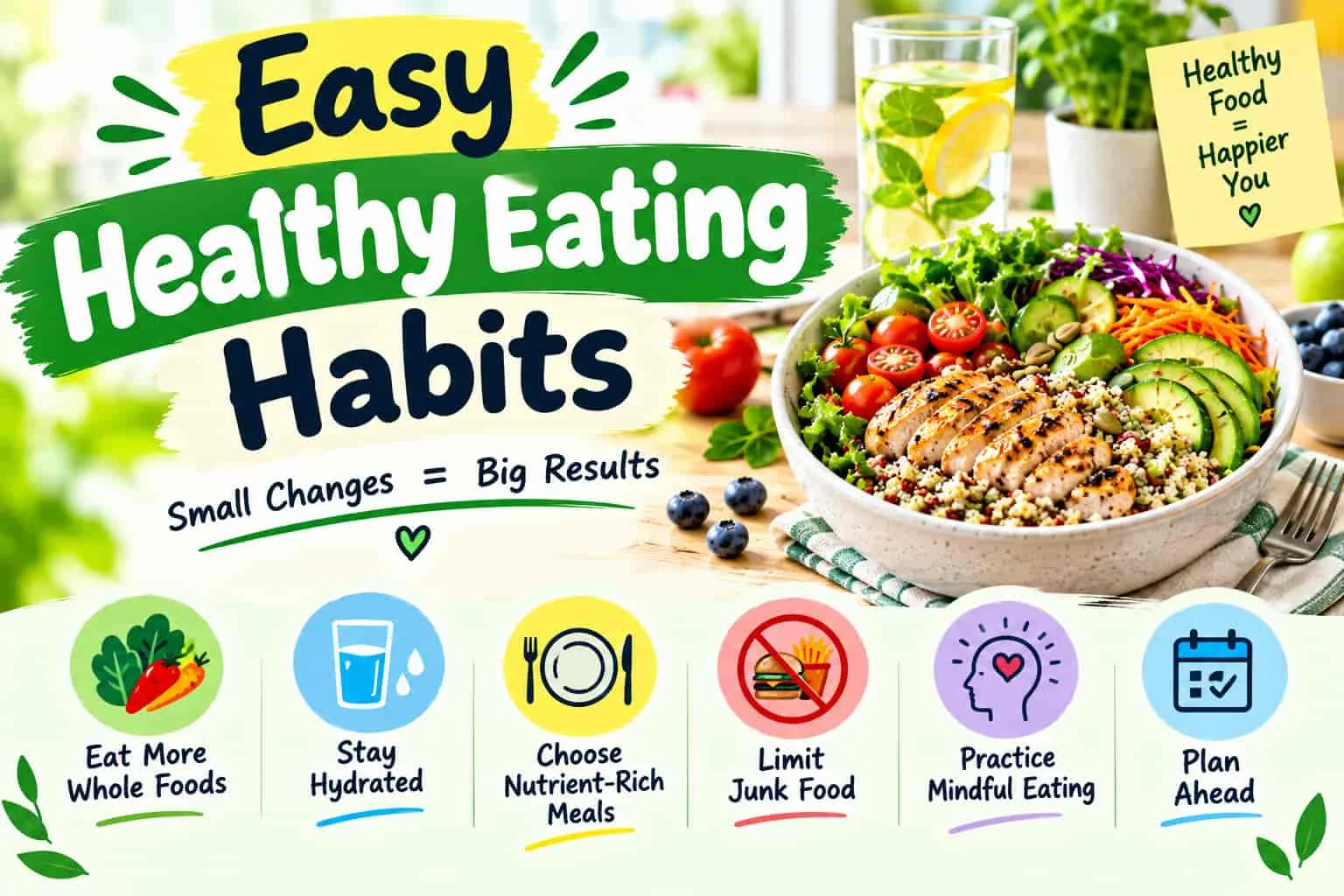
You don’t need a new grocery list to eat better. The easiest habit is adjusting what you already eat rather than replacing it. If dinner is usually pasta, throw in a handful of spinach or some frozen peas it takes thirty seconds and barely changes the meal you already like. Same goes for swapping white rice for brown, or using half the amount of a heavy sauce. None of this requires new skills, just small tweaks to the meal that’s already on your stove.
Keep the “Good” Option Visible
There’s a reason vending machines and checkout aisles work visibility drives choices more than willpower does. The same trick works in your favor at home. Put fruit in a bowl on the counter instead of a drawer in the fridge. Keep nuts or yogurt at eye level. Push the chips to the back of the pantry, not out of restriction, just out of sight. This is one of those habits that costs nothing and needs almost no daily effort once it’s set up.

Make Water the Default Drink
This is probably the single lowest-effort change on this list. Swapping soda or sugary coffee drinks for water most of the time not necessarily all the time cuts a surprising amount of added sugar without you having to think about food choices at all. Keep a bottle wherever you already sit most (desk, car, couch), and it becomes automatic pretty fast.
Use the “Add One Thing” Rule
Rather than overhauling meals, just try adding one extra healthy element to whatever you’re already eating: a side salad with your usual takeout order, an egg alongside your regular breakfast, some fruit after lunch. It’s a far easier ask than “eat clean,” and it stacks up over time without ever feeling like a diet.
Let Leftovers Do the Work
Cooking once and eating twice is one of the easiest ways to avoid last-minute unhealthy choices. Making a slightly bigger batch of dinner enough for lunch the next day means you’re not scrambling for something quick when you’re hungry and short on time. It’s not meal prepping in the dedicated-Sunday sense, just cooking with tomorrow in mind.
A Quick Comparison: Easy vs. High-Effort Habits
| Goal | High-Effort Version | Easy Version |
|---|---|---|
| Eat more vegetables | Plan and cook new vegetable-based recipes | Add a handful of vegetables to meals you already make |
| Reduce added sugar | Track sugar grams daily | Default to water instead of sugary drinks |
| Better snacking | Prep portioned snack containers | Put fruit and nuts where you’ll actually see them |
| Avoid last-minute takeout | Full weekly meal plan | Cook slightly extra dinner for next day’s lunch |
| Balanced meals | Calculate macros per meal | Fill half the plate with produce, roughly |
Why “Easy” Actually Works Better Long-Term
Habits that require a lot of setup or willpower tend to fade the moment life gets busy a late night at work, a stressful week, a trip. Easy habits survive those disruptions because they don’t ask much of you in the first place. That’s really the whole point: something you can still do on a bad day is more valuable long-term than something that only works when everything else in your life is going smoothly.
If you want to build on these once they feel automatic, it might help to look into simple meal planning for busy weeks, since a little bit of planning stacks nicely on top of habits that are already easy to maintain.
A Word on Not Overcomplicating It
It’s tempting to turn “easy habits” into another rulebook tracking every small change, feeling guilty about missed days, chasing an ideal version of eating that isn’t realistic for your actual life. That defeats the purpose. The whole idea here is reducing effort and mental load around food, not adding a new source of pressure. If food starts to feel like a source of stress rather than something you’re gradually improving, it’s worth talking to a doctor or registered dietitian rather than pushing through it solo. For general, evidence-based guidance, the Dietary Guidelines for Americans is a reliable reference point.
Frequently Asked Questions
What’s the easiest healthy eating habit to start with today? Swapping your most common sugary drink for water is usually the lowest-effort, highest-impact change no planning or shopping required.
Do easy healthy habits actually make a difference, or do I need a strict plan? Small, consistent habits tend to add up more reliably than strict plans, mostly because they’re easier to keep doing. Consistency over months matters more than intensity over a few weeks.
How do I eat healthy without meal prepping every week? Cooking a bit extra at dinner so you have leftovers for lunch covers a lot of the same ground as formal meal prep, with far less time investment.
Can small changes like this actually help with weight or energy levels? They can, over time. The effect of any single small habit is modest, but several easy habits stacked together often produce noticeable results without feeling restrictive.
Is it okay to still eat treats while building these habits? Yes. These habits are about shifting your everyday defaults, not eliminating foods you enjoy. Treats fit in fine alongside a generally easy, sustainable approach.
Bottom Line
Easy healthy eating habits work precisely because they don’t ask much of you swap a drink, add a vegetable, keep good options visible, cook a little extra. None of it requires a meal plan or a subscription box. Pick one or two of these, let them become automatic, and only then think about adding more. That’s usually a far more realistic path than trying to fix everything about how you eat in one go.