I used to walk into the grocery store with good intentions and walk out with three bags of snacks and zero vegetables. Not because I didn’t care I just didn’t have a plan, and the store is basically designed to take advantage of that. A grocery list changed more about my eating habits than any diet advice ever did, mostly because it removes the guessing part.
If you’re trying to eat better and keep landing on this same problem, a solid healthy eating grocery list is honestly one of the simplest fixes available. You don’t need to overhaul your whole pantry in one trip. You just need a list that covers the basics and a rough idea of what to skip.
Why a List Actually Works
It sounds almost too simple to matter, but shopping without a list means you’re making dozens of small decisions on the spot, usually while hungry, tired, or in a hurry. That’s exactly when the cookie aisle wins. A list written ahead of time, when you’re not standing in front of the chip display, tends to reflect what you actually want to be eating rather than what looks good in the moment.
USDA’s own guidance backs this up before heading out, it’s worth taking fifteen or twenty minutes to plan meals for the week and build a list around them, covering breakfast, lunch, dinner, and snacks so nothing gets left out.
The Grocery List, Broken Down by Food Group
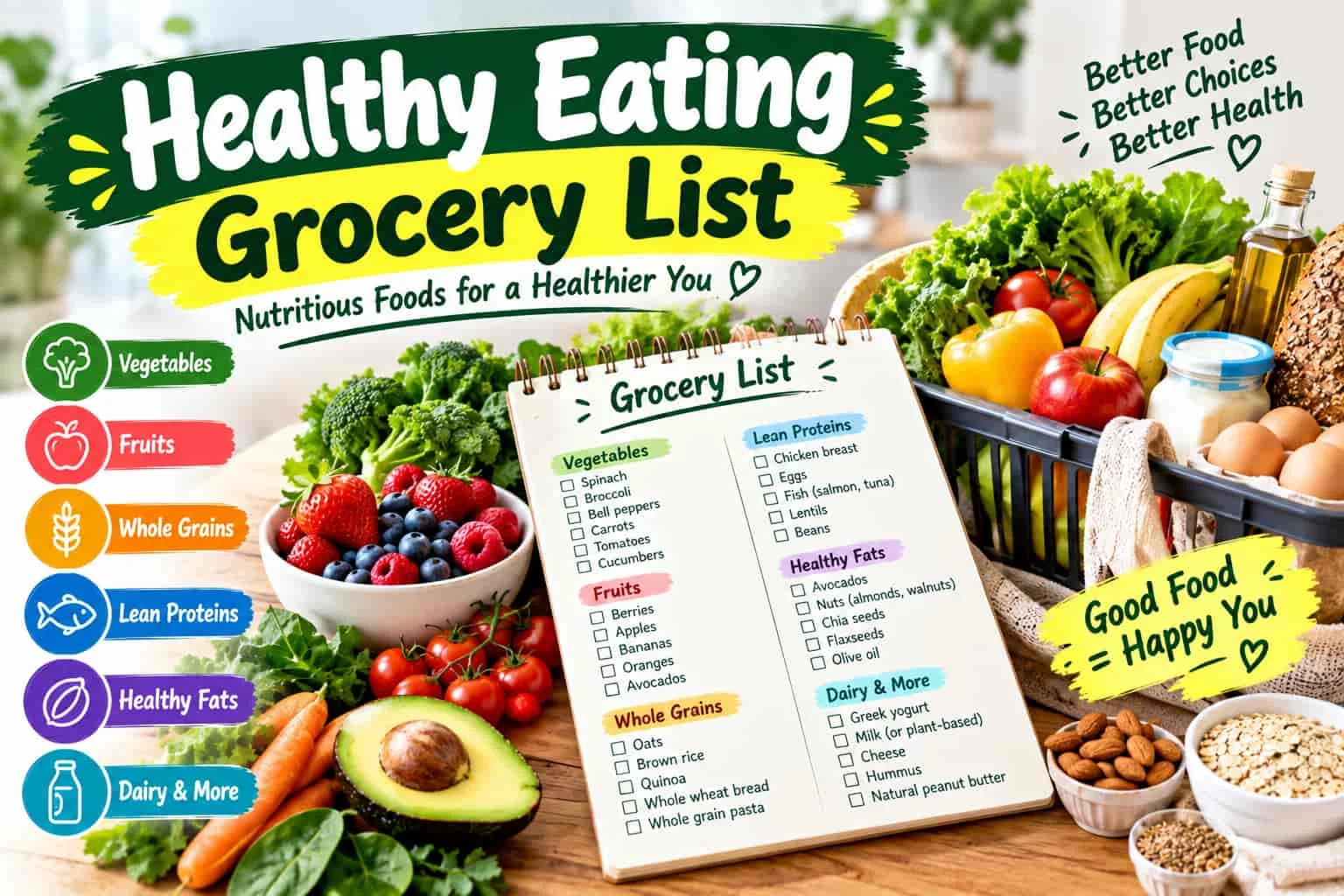
Here’s a working list you can adjust based on what you actually like to eat. The point isn’t to buy everything on it every week it’s to have a framework so you’re not standing in the produce aisle wondering where to start.
| Food Group | What to Look For |
|---|---|
| Vegetables | Leafy greens, broccoli, carrots, peppers, onions, tomatoes, frozen mixed veggies |
| Fruits | Bananas, apples, oranges, frozen berries, no-sugar-added dried fruit |
| Whole Grains | Brown rice, oats, whole wheat bread, quinoa, whole wheat pasta |
| Protein | Eggs, chicken, fish, beans, lentils, tofu, unsalted nuts |
| Dairy (or alternatives) | Low-fat milk, plain yogurt, cheese in moderation, fortified soy milk |
| Pantry staples | Olive oil, canned tomatoes, low-sodium broth, spices, canned beans |
Frozen and canned versions of fruits and vegetables count too, as long as you’re checking labels for added sugar or sodium. There’s a bit of a myth that “healthy” only means fresh, and honestly frozen vegetables are often just as nutritious and a lot less likely to go bad before you get to them.

How to Actually Build Your List Each Week
- Take a quick look at what meals you’re likely to make it doesn’t need to be a rigid plan, just a rough idea.
- Write your list by section (produce, protein, grains, dairy, pantry) so you’re not backtracking through the store.
- Check what you already have before adding duplicates half-used bags of rice and forgotten spices pile up fast.
- Leave a little room for flexibility. If something’s on sale or looks better than what you planned, that’s fine.
- Don’t shop hungry, if you can help it. Everything looks like a good idea on an empty stomach.
If you’re just getting into cooking more of your own meals, our post on simple meal prep ideas for beginners pairs well with this list it walks through turning these ingredients into actual meals without a ton of extra effort.
What to Watch Out For at the Store
- “Low-fat” or “diet” labels often mean more added sugar to make up for the missing fat check the label instead of trusting the front of the box.
- Pre-seasoned or marinated meats tend to carry a lot of extra sodium. Plain cuts you season yourself give you more control.
- Juice gets marketed as healthy, but most of it is closer to sugar water once you check the label. Whole fruit is almost always the better call.
- Snack aisle “health” products protein bars, granola, trail mix can be genuinely useful or basically candy depending on the brand, so it’s worth a quick label check rather than assuming.
Shopping on a Budget
Eating well doesn’t have to be expensive, even though it sometimes gets marketed that way. Beans, eggs, oats, frozen vegetables, and rice are some of the cheapest items in the store and also some of the most nutritious. Buying in-season produce, checking store flyers before you go, and sticking closer to whole ingredients instead of pre-packaged convenience foods all add up over a month. If budgeting is a bigger concern for you right now, our guide on healthy eating for beginners covers more ways to keep costs down without cutting corners on nutrition.
Frequently Asked Questions
How do I make a healthy grocery list if I’m not sure what to cook? Start with the food-group table above and pick a couple of items from each category. Even without a specific recipe in mind, having balanced ingredients on hand makes it much easier to throw together a decent meal.
Are frozen vegetables as healthy as fresh ones? In most cases, yes. Frozen vegetables are usually picked and frozen at peak ripeness, so the nutrient content stays close to fresh. Just watch out for versions with added sauces or seasoning packets.
How often should I update my grocery list? Weekly works well for most people, since it lines up with how often produce and perishables need replacing. You can reuse the same basic list and just swap out a few items depending on what you’re in the mood for.
Is it cheaper to buy healthy food or processed food? It depends on what you’re comparing. Whole staples like rice, beans, and eggs are often cheaper per meal than packaged convenience foods, even though the convenience foods sometimes look cheaper up front per item.
Should I avoid the middle aisles of the grocery store entirely? Not entirely that’s where pantry staples like oats, canned beans, and spices usually are. The rule of thumb is to be more selective there, since that’s also where most heavily processed snacks and sugary items tend to live.
Final Thoughts
A grocery list won’t fix everything on its own, but it removes a surprising amount of the decision fatigue that leads to impulse buys and skipped vegetables. Keep the list simple, build it around the basics, and adjust it as you figure out what actually works for your week. That’s really most of the battle.
Further reading: