I remember this one stretch a couple of years back where I was technically eating enough, three meals a day, snacks in between, nothing crazy, but I felt tired constantly. Low focus in the afternoons, caught every cold going around the office, the whole thing. A friend who’s into nutrition asked me what I was actually eating, not how much, and that’s when it clicked. I was eating plenty of calories that weren’t doing much for me. Bread, pasta, the usual quick stuff. Once I started paying attention to what was actually in my food instead of just how full it made me, things shifted faster than I expected.
So if you’re in that same spot, or honestly just want to eat a bit smarter as an adult without flipping your whole diet upside down, here’s what I’ve learned works.
What “Nutrient-Dense” Even Means
It’s basically a fancy way of saying a food gives you a lot of vitamins, minerals, and good stuff per calorie. Doesn’t mean you eat less. Doesn’t mean bland diet food either. It just means you’re getting more value out of the same plate.
This matters more once you’re past your twenties, honestly. Metabolism slows a bit, and things like calcium, vitamin D, B12, and fiber get harder to keep up with through a typical diet. Nobody really tells you that until you feel it.
Leafy Greens
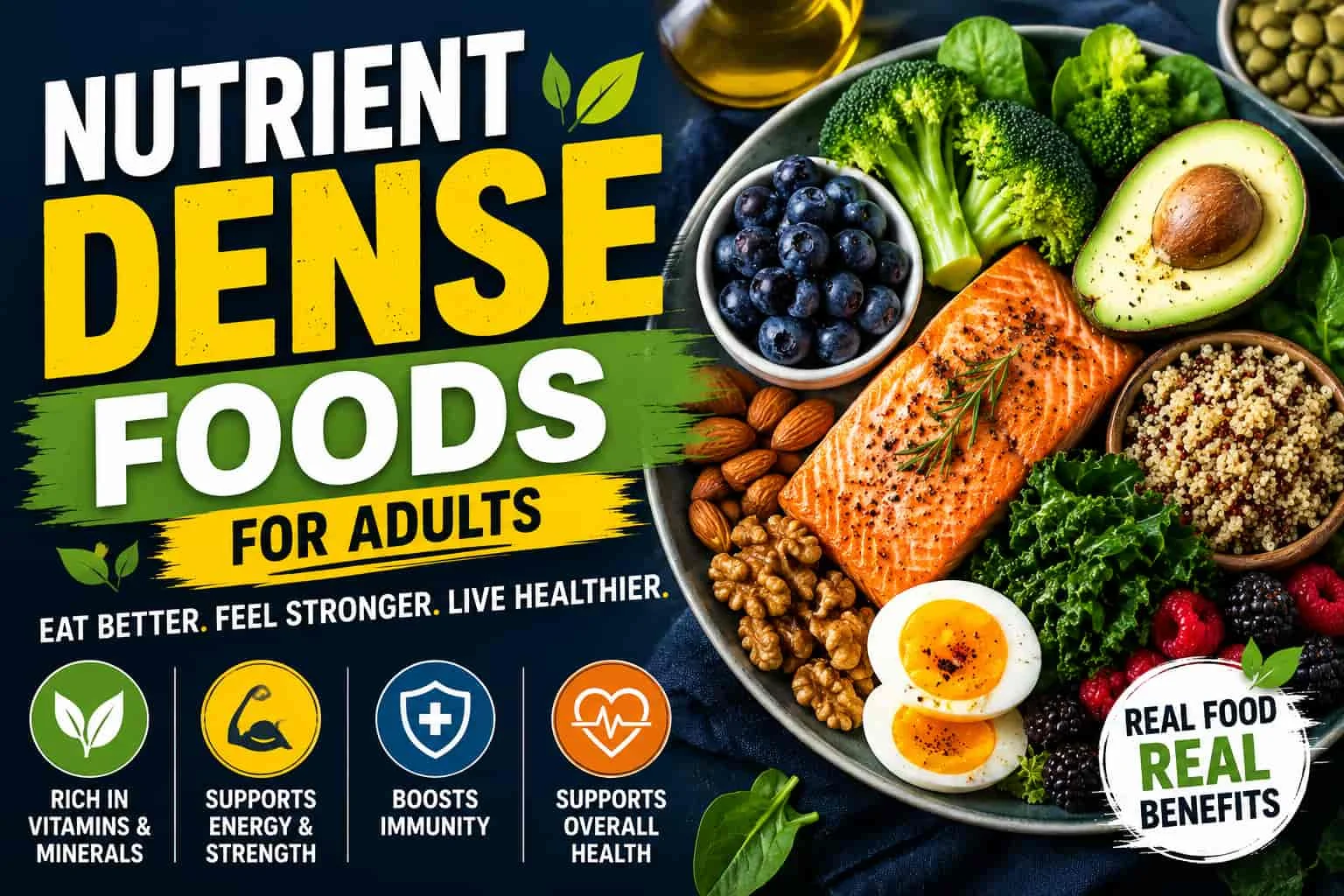
Spinach, kale, broccoli, that whole category. High in vitamin K, vitamin C, folate, fiber, and barely any calories to speak of. I used to think I hated kale until I realized I’d only ever had it in a bad smoothie once in college.
What actually worked for me was just throwing a handful of spinach into whatever I was already making. Eggs in the morning, pasta at night, doesn’t matter. You barely taste it but it adds up over a week without you thinking about it.
Fatty Fish
Salmon, sardines, mackerel. This is where most people are actually missing something, omega-3s specifically, which are tied to heart and brain health. Fatty fish also brings vitamin D and B12 along with it, both of which get harder to get enough of as you age.
Two servings a week gets mentioned a lot as a target. And look, canned sardines aren’t glamorous, but they’re cheap and take zero effort, which honestly makes them more useful than fresh salmon you’ll forget about in the fridge.

Eggs
People go back and forth on eggs constantly and I’ve stopped paying attention to the debate. They’re a genuinely solid food. Protein, choline, vitamin D, a handful of B vitamins, all in something that takes two minutes to cook.
Legumes and Beans
Lentils, chickpeas, black beans. Fiber and plant protein together, which keeps you full longer and seems to help with blood sugar staying steadier through the day. Also just cheap, which matters if you’re trying to eat better without your grocery bill doubling.
Nuts and Seeds
Almonds, walnuts, chia, flax. Good fats, protein, fiber, magnesium, zinc, all packed into something small. Portion matters here since they’re not low-calorie by any stretch, but a small handful daily does something.
Quick Reference Table
| Food Group | Key Nutrients | Easy Way to Add It |
|---|---|---|
| Leafy greens | Vitamin K, folate, fiber | Mix into eggs, soups, or smoothies |
| Fatty fish | Omega-3s, vitamin D, B12 | Aim for 2 servings a week, canned is fine |
| Eggs | Protein, choline, vitamin D | Quick breakfast base |
| Legumes | Fiber, plant protein | Add to soups, salads, grain bowls |
| Nuts and seeds | Healthy fats, magnesium, zinc | Small daily handful, or sprinkle on meals |
Berries
Blueberries, strawberries, raspberries. Antioxidants, fiber, and way less sugar than most fruit. I use these as a dessert swap more than anything, tossed into yogurt or oatmeal when I want something sweet without the crash after.
Fermented Foods
Yogurt, kefir, sauerkraut. These help gut health through natural probiotics, and it turns out a lot of nutrient absorption comes down to gut health more than people realize. Plain yogurt with live cultures is probably the easiest one to just start doing.
Making It Fit Into a Normal Life
I didn’t do a strict meal plan for any of this, honestly that never works for me long-term. It was smaller swaps:
- Lentils instead of white rice a couple times a week
- Spinach or kale tossed into stuff I already cook
- Canned sardines or salmon kept around for lazy dinners
- A small handful of nuts instead of chips when I want to snack
- Plain yogurt instead of the flavored kind with sugar dumped in
None of it felt like a diet, which I think is exactly why it stuck. The stuff that feels like punishment never lasts more than a few weeks anyway.
If you want to go further with this, our guide to meal planning for busy adults and breakdown of daily vitamin and mineral needs cover the next steps in more detail.
Harvard T.H. Chan School of Public Health describes nutrient-dense foods as those providing meaningful amounts of vitamins, minerals, and other beneficial compounds relative to calorie content, which tracks with everything above. The USDA Dietary Guidelines also break down recommended nutrient-dense food groups by life stage if you want more specifics for your own age range.
Frequently Asked Questions
1. What are the most nutrient-dense foods for adults? Leafy greens, fatty fish, eggs, legumes, nuts, seeds, and fermented foods are usually near the top of any list like this, and for good reason.
2. Do nutrient-dense foods actually help with weight management? Often, yes. They tend to be filling for their calorie count, which naturally cuts down on overeating without needing to count anything.
3. Are these foods more expensive than regular groceries? Not really. Eggs, canned fish, beans, frozen vegetables, none of that is pricey. It’s more about what you choose than what you can afford.
4. How many of these should I actually eat per day? No strict number here. Building most meals around one or two of these groups is realistic and sustainable for most people.
5. Can I just take supplements instead of eating these foods? Not really, no. Whole foods bring a combination of nutrients and fiber that work together in ways a pill on its own usually can’t replicate.
Final Thoughts
Looking back, that tired stretch I mentioned earlier wasn’t about not eating enough, it was about eating stuff that wasn’t giving me much back. Once I started building meals around a handful of these foods instead of trying to overhaul everything overnight, it actually stuck. Small changes, repeated often enough, ended up mattering way more than any strict diet ever did for me.